

Statute of limitations on parking fines: When does a ticket expire?
TL;DR – Parking charges and time limits
A parking charge does not remain valid forever. In most jurisdictions, a “statute of limitations” dictates that a fine becomes unenforceable after a specific period—typically between 3 to 6 years, depending on the country. However, this period can be paused or reset by actions such as debt acknowledgment or legal proceedings.
While the law may allow years to collect a debt, relying on manual tracking increases the risk of lost revenue due to human error or lost evidence. Digital parking solutions like OPARKO automate the lifecycle of a ticket, ensuring deadlines are met, evidence is preserved, and revenue is protected.
Do you have unpaid parking charges sitting on your books that seem impossible to collect? You are not alone. Property managers, parking operators, and housing associations worldwide frequently face the question: How long is a parking fine valid, and when does the debt legally expire?
In this article, we explore the concept of the “statute of limitations” on parking charges, how rules vary across major markets like the UK, US, and Australia, and why relying on manual administration is a financial risk. We also look at how digital parking management systems, such as OPARKO, prevent revenue leakage by automating compliance.
What is the statute of limitations on parking debt?
In legal terms, the statute of limitations is a law that sets the maximum time after an event within which legal proceedings may be initiated. In the context of parking, it means that if a parking operator waits too long to take legal action to collect an unpaid charge, the debt becomes “statute barred” and can no longer be legally enforced.
These rules exist to ensure that creditors (property owners) do not wait an unreasonable amount of time to pursue a claim, and to protect debtors from being sued for ancient debts where evidence may no longer exist.
How long is a parking fine valid?
The time limit varies significantly depending on the jurisdiction and local laws regarding contract law and civil debt.
General rules by region:
- United Kingdom & Australia: In general, parking charges on private land are treated as a contract. Under the Limitation Acts in these regions, a creditor typically has 6 years to initiate court proceedings to recover the debt.
- United States: The timeframe depends entirely on the state. For example, the statute of limitations for breach of contract can be 4 years in states like Texas or California, but up to 6 years in New York.
- Continental Europe (e.g., Denmark): The standard limitation period is often shorter, typically 3 years from the payment deadline.
When does the clock start?
The limitation period usually does not start on the day the car was parked. Instead, it typically begins from the date the payment was due (often 14 to 28 days after the violation). If legal action is not commenced before this period ends, the revenue is effectively lost.
Can the time limit be reset?
Yes. The “clock” on a debt is not always a straight countdown. In many legal systems, the limitation period can be interrupted or reset. Common scenarios include:
- Acknowledgment of Debt: If the driver replies to a letter admitting they owe the money, or makes a partial payment, the time limit often resets to zero.
- Legal Action: Initiating a formal claim in civil court stops the clock.
What if there is a court judgment?
If you successfully take a non-payer to court and obtain a judgment (such as a County Court Judgment in the UK or a civil judgment in the US), the enforceability of that debt extends significantly. In many jurisdictions, a court judgment remains enforceable for 10 years or more.
The hidden risks of manual management
While having 3 to 6 years to collect a debt sounds like a long time, manual parking management often leads to missed deadlines. Relying on spreadsheets or paper systems creates several risks:
- Lost Evidence: If you try to collect a fine 4 years later, can you easily locate the original timestamped photos and timestamped logs?
- Foreign Vehicles: Cross-border enforcement is difficult. If you don’t act quickly while the car is in the country, the statute of limitations may run out before you can identify the owner.
- Human Error: Without automated alerts, it is easy to miss the window for sending the initial “Notice to Keeper” or follow-up reminders required by industry codes of practice.
The solution: Automate revenue protection
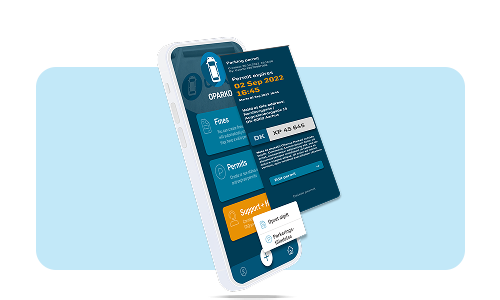
To avoid the legal headache of expired debts, modern property managers use digital parking solutions. OPARKO’s platform provides a complete digital ecosystem where permits, fines, and payments are handled centrally.
How digital systems protect your revenue:
- Automated Workflows: Reminders and escalation letters are sent automatically at the correct intervals, ensuring you never miss a legal deadline.
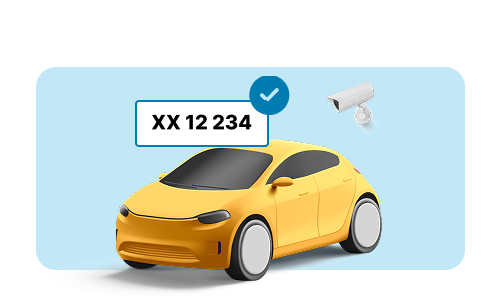
- Digital Evidence Storage: Photos, timestamps, and GPS data are stored securely in the cloud, ready to be retrieved instantly even years later.
- Compliance: The system is designed to adhere to local regulations, ensuring that fines are issued and pursued correctly from day one.
Conclusion: Don’t let revenue expire
Whether the statute of limitations in your region is 3 years or 6 years, waiting until the last minute is a bad business strategy. Uncollected parking charges represent lost revenue that could be used for property maintenance and security.
With a digital solution from OPARKO, you ensure that every parking charge is tracked, documented, and pursued efficiently. It removes the guesswork and ensures that your parking assets remain profitable.
Ready to modernize your parking management? Contact OPARKO to learn how our digital tools can secure your revenue and simplify administration.
Related topics covered in this article:
- Statute of limitations on parking fines
- Expiration of private parking charges
- Debt recovery time limits UK/US/Australia
- Digital parking management software
- Automated parking enforcement
Visit OPARKO.com for a modern, digital parking solution that minimizes administration and maximizes revenue.