

Understanding parking signs
TLDR – Understanding parking signs
Parking signs are often more complex than they appear at first glance. The universal “P” symbol is frequently accompanied by sub-plates, arrows, specific text, and icons that collectively define who may park, when, and where.
- Sub-plates and Text: These specify time limits and exceptions. While some regions use symbols or color codes for weekends, others explicitly list days (e.g., “Mon-Fri”).
- Zone Indicators: Arrows often dictate the direction in which the rule applies, while road markings (like colored curbs or yellow lines) can override or supplement vertical signs depending on the country.
- Private Enforcement: Clear signage is crucial on private property—such as residential complexes, businesses, and hotels—to ensure legal and efficient parking management.
- Digital Solutions: Oparko offers customized signage and a digital platform that simplifies permit management, payments, and enforcement online, removing the need for physical presence.
In short: Learn to decode the signs, understand the local nuances, and manage parking smarter with Oparko.
Understanding parking signs: The international visual guide
Are you unsure how to read parking signs correctly? You are not alone. While the basic “P” symbol is widely recognized, the information hidden in sub-plates, arrows, and varied local conventions can be confusing. This visual guide from Oparko explains what you need to know to interpret parking signs correctly and how to apply this knowledge to the administration of private and commercial parking areas.
We dive into the meaning of signs, explain common symbols, and highlight key differences between regions like the UK, the USA, and Europe, ensuring you get the full picture.
Parking signs – What do they mean?
The classic white “P” on a blue background is the standard under international conventions (Europe/UK), marking areas where parking is generally permitted. However, in the USA and other regions, you may also see white signs with green text (“Parking Permitted”) or red text (“No Parking”).
There are three main categories of parking signage:
- Standard P-Sign: Indicates that parking is permitted, often without immediate time or payment restrictions.
- P-Sign with Sub-plate/Add-on: Adds critical information: who may park, during which hours, and for how long.
- Prohibition Signs: Often a “P” with a slash through it, or signs with specific colors (like Red in the US or Blue/Red circles in Europe) signaling that parking is forbidden.
The purpose of these signs is to regulate space usage and ensure fair rotation, particularly in dense urban areas or commercial zones.
The fine print: Time limits, arrows, and road markings
The “fine print” on sub-plates or supplementary signs determines whether you are parked legally or risking a fine. It is essential to understand that conventions vary significantly across borders.
- Time Restrictions: Always check the specific days listed.
- In the UK and USA, days are typically written out explicitly (e.g., “Mon – Sat” or “8 AM – 6 PM”).
- In many European countries, specific color codes (such as red text or parenthesis) may denote Sundays or holidays. Always verify the local legend.
- Arrows and Directions: Arrows indicate the range of the regulation.
- Generally, an arrow pointing towards the road or in a specific direction implies the rule applies from that point onwards.
- A double-headed arrow usually indicates you are within a continuous zone.
- If there is no arrow, the rule typically applies to the immediate bay or area.
- Road Markings vs. Vertical Signs:
- In the UK, double yellow lines on the road mean “No Parking at any time,” regardless of vertical signs.
- In the USA, colored curbs (Red for fire lanes, White/Green for loading) often dictate the rule before you even look at a sign.
Symbols: EVs, disabled parking, and special vehicles
Icons are largely universal and help overcome language barriers:
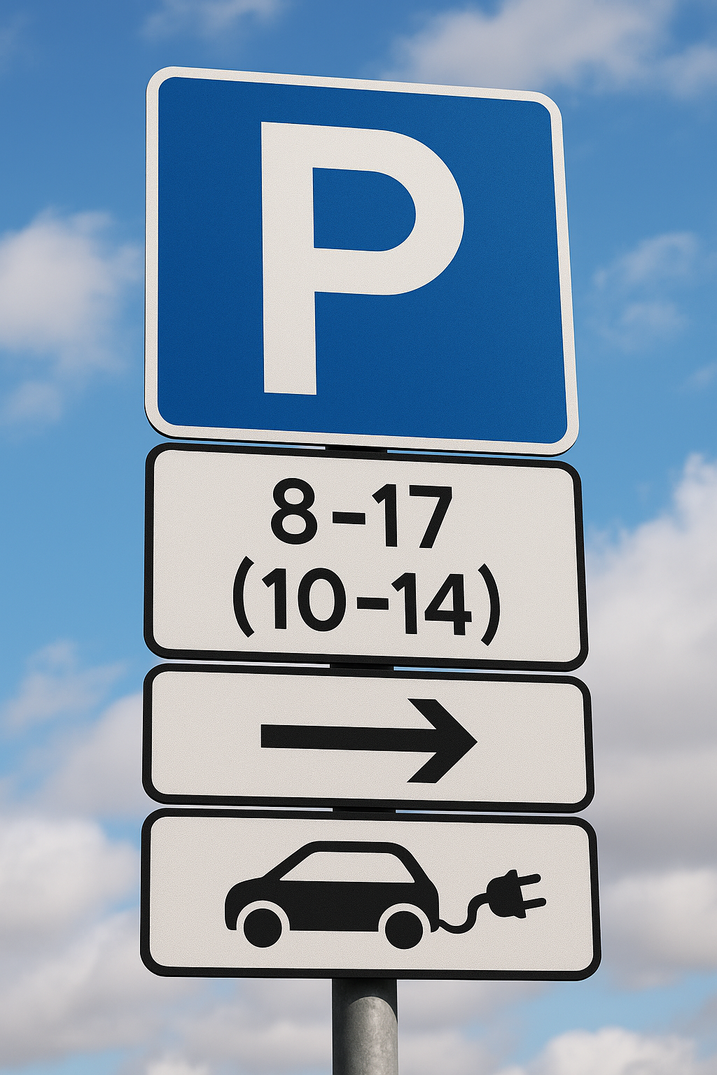
- Electric Vehicle (EV) Symbol: Usually a car with a plug icon. This indicates the spot is reserved for EVs or plug-in hybrids. Note that in many jurisdictions, you must be actively charging to park here.
- Disabled Symbol (Wheelchair): Indicates the space is reserved for vehicles displaying a valid disabled parking permit (Blue Badge).
- Other Symbols: You may see specific icons for motorcycles, loading zones, or resident-only parking.
Private land and practical rules
Parking rules differ between public streets and private property. On private land (shopping centers, housing associations, office parks), the owner sets the rules. These are enforceable as long as the signage is clear, visible, and complies with local regulations.
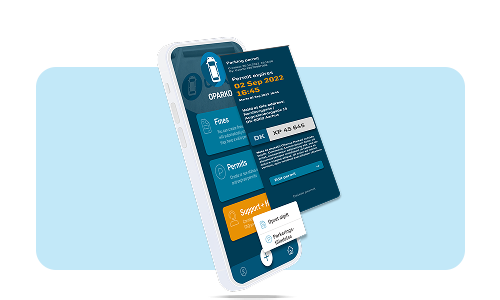
At Oparko, we offer parking solutions where these rules are integrated digitally. From issuing permits to handling automatic payments and enforcement, you can manage everything from one central platform without the need for physical patrols.
Materials, quality, and visibility
A good parking sign must withstand all weather conditions. Therefore, reflective, UV-stabilized, and weather-resistant materials are used to ensure visibility day and night.
Signs are typically mounted on:
- Galvanized poles
- Walls and facades
- Ground spikes for gravel or grass areas
Examples: How to read the combination
Imagine the following scenario on a signpost:
- Blue “P”
- Text: “2 Hour Limit, 8 AM – 6 PM”
- Symbol: EV Plug
- Arrow pointing Right
Meaning: Parking is permitted to the right of the sign. However, it is restricted to Electric Vehicles only. Between 8 AM and 6 PM, these vehicles can stay for a maximum of 2 hours. Outside of these hours, restrictions may be lifted, but one should always check for “At Any Time” rules.
Digital parking management with Oparko
Managing parking doesn’t have to be complicated. Oparko provides a suite of tools for private landowners:
- Manage parking permits online
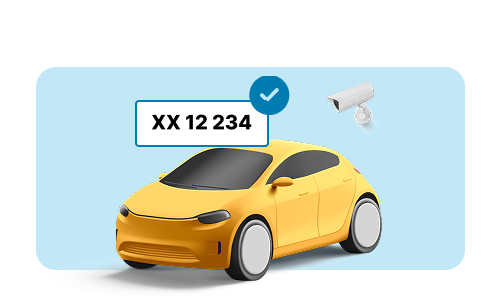
- Monitor areas with camera technology (ANPR)
- Control daily operations without physical attendance
- Digitally rent out spaces and automate invoicing
- Create a user-friendly and efficient parking experience
FAQ – Frequently asked questions
What do arrows on parking signs mean?
Arrows indicate the direction and extent of the parking zone. A double arrow means the rules apply to both sides of the sign.
How do I know if a spot is for Electric Vehicles?
Look for a specific sub-plate or icon depicting a car with a charging plug. The bay itself may also be painted with a symbol.
Can signs be customized to my property’s needs?
Yes. Oparko offers customized signage that includes the specific text, symbols, and rules required for your private area.
Can I enforce parking rules on my private land?
Yes, provided that signs are installed correctly and clearly state the terms and conditions. Oparko’s platform helps you digitize permits and manage enforcement and documentation efficiently.
Conclusion: Signage that puts you in control
- Complete overview with one click
- Tailored signage solutions
- Digital enforcement and payment
- Reliable platform with live data
Contact us today to get a modern parking solution that fits your needs—whether you manage a residential complex, a hotel, or a commercial property. With Oparko’s digital parking management, the path to clear and efficient parking operations is straightforward.