

Parking near intersections and corners: understanding the rules
What do the rules say about parking near corners?
In almost every country, traffic laws prohibit stopping or parking too close to an intersection or a road junction. While the specific distance varies by jurisdiction, the core principle remains the same: a “buffer zone” must be maintained to ensure clear passage and optimal visibility for all road users—including drivers, cyclists, and pedestrians.
The required distance depends on local legislation. For example, in the UK and Denmark, the standard rule is often 10 meters from the junction. In the United States, the rule is typically 20 feet (approx. 6 meters) from a crosswalk or intersection, while in countries like Germany, the minimum distance is 5 meters. This rule generally applies to public roads as well as private driveways with public access, such as entrances to residential complexes.
How is the distance measured?
Regardless of the specific distance required in your region, the measurement is typically taken from the nearest edge of the intersecting roadway—the point where the kerbs or road edges effectively meet. At corners with rounded kerbs, the distance is usually measured from the point where the roads would meet if they continued in a straight line.
It is important to note that the distance is measured along the kerb or the edge of the road, not diagonally across the pavement. This ensures the parking buffer corresponds to the actual sightlines needed for safe traffic flow.
Why is the corner parking rule important?
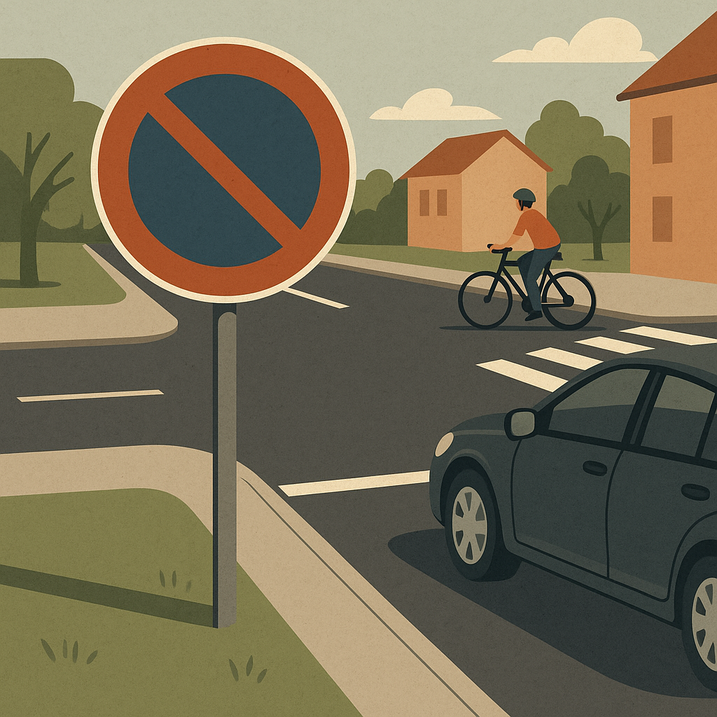
Restrictions on parking near intersections are established to prevent vehicles from blocking visibility. When a car is parked too close to a corner, it makes it difficult or dangerous for other drivers to navigate the turn or see oncoming traffic. This is critical for safety, as drivers, cyclists, and pedestrians rely on being able to see and assess each other’s movements in time.
Blocking this view creates blind spots that can lead to accidents, particularly when vehicles are exiting side streets or when pedestrians are attempting to cross the road.
Special cases and additional restrictions
Beyond the standard distance rule, many jurisdictions have stricter requirements for specific scenarios:
- Pedestrian Crossings: The parking ban is often extended near zebra crossings or crosswalks to ensure pedestrians are visible to approaching traffic.
- Stop Signs and Traffic Lights: In countries like the US and Australia, parking is often prohibited further back (e.g., 9 to 20 meters) if a stop sign or traffic light is present.
- Cycle Paths: If a dedicated cycle path enters the intersection, the measurement often starts from the edge of the cycle path to protect vulnerable road users.
These rules typically apply regardless of whether there are specific “No Parking” signs. It is generally the driver’s responsibility to know the local regulations.
Consequences of non-compliance
Parking too close to an intersection or corner is a common reason for receiving a parking fine. Municipal parking enforcers and private parking management companies are authorized to issue penalties for these violations. In severe cases where the vehicle causes a dangerous obstruction, it may also be towed at the owner’s expense.
How to avoid parking fines at intersections
- Know the local limit: Check if your area requires 5 meters, 10 meters, or 20 feet, and leave a generous margin.
- Look for markings: Many cities use visual aids—such as yellow lines (UK/EU) or red/yellow kerbs (US)—to mark the prohibited zone.
- When in doubt, park further back: If you are unsure exactly where the corner “starts,” it is always safer to park a few meters further away to ensure safety and avoid a ticket.
Better overview with digital parking solutions
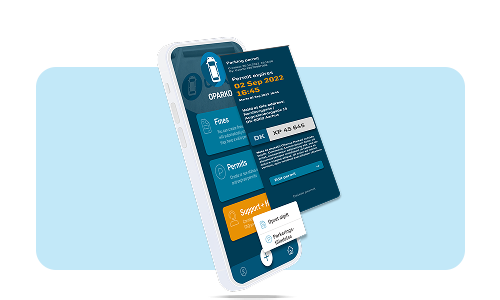
At OPARKO, we help housing associations, property owners, and facility managers ensure clarity and compliance with parking regulations—regardless of the specific local distance rules—through digital solutions. Our user-friendly platform provides full control over permits, signage, and automated enforcement.
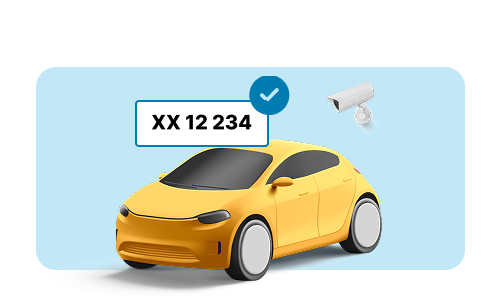
With features such as Automatic Number Plate Recognition (ANPR) and digital permit management, we help you operate parking areas more effectively. This ensures:
- Fewer disputes regarding illegal parking near corners and access points.
- Reduced administrative burden for property managers.
- Increased safety and better traffic flow on your property.
For residential and commercial areas with corner parking
Enforcing the correct distance from intersections is particularly important in dense residential environments and commercial centers where space is at a premium. A centralized digital platform ensures that rules are respected, visibility is maintained, and sanctions can be handled efficiently.
OPARKO’s solution is flexible and can be configured to match the specific legislation of your country or municipality. Whether you need to enforce a 5-meter rule or a 10-meter rule, our digital management system reduces errors and conflicts in daily operations.
Conclusion
Respecting the “buffer zone” at intersections ensures free passage and clear visibility in traffic—a rule that should be respected by all drivers globally. For private landowners and housing associations, it is crucial to implement solutions that help residents and guests park correctly near corners.
With OPARKO’s digital parking solution, you get reliable, efficient, and user-friendly management of your parking areas, ensuring that safety rules are naturally followed.
Read more about our solutions and get an overview in one click at oparko.com.