

Grace periods & observation time in private parking
TL;DR
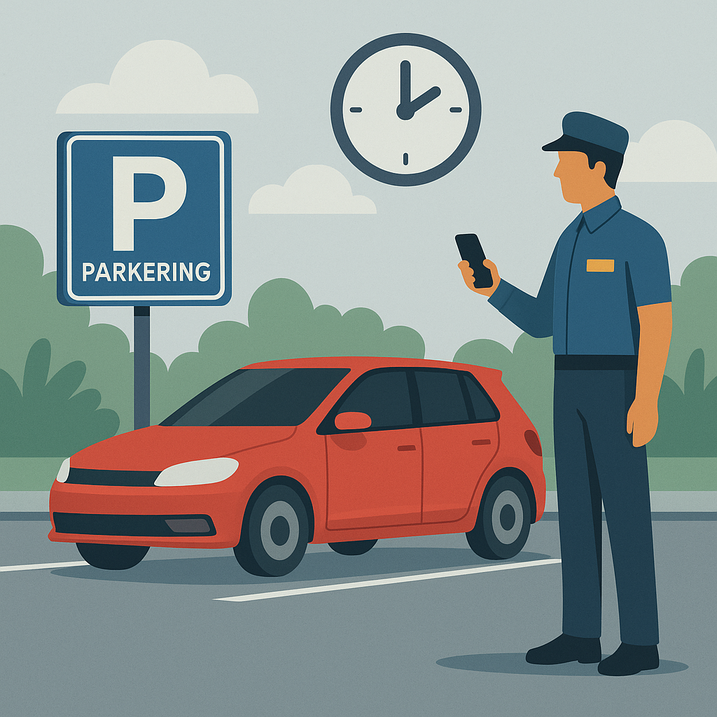
- Observation Time is the brief window a parking warden or camera system monitors a vehicle before issuing a fine, allowing drivers time to correct mistakes (e.g., buying a ticket).
- Grace Periods typically refer to the time allowed after a parking session expires before a penalty is issued.
- Regulations vary globally: In the UK, a 10-minute grace period is often mandatory; in the US and Australia, it is typically a matter of contract law or “fair use” policies.
- Serious violations (e.g., blocking fire lanes or disabled bays) generally allow for immediate fines with no observation period.
- Digital systems—such as those from Oparko—automatically document these timeframes, ensuring compliance with local laws and increasing fairness for drivers.
In short: A reasonable observation time protects drivers from unfair fines and ensures compliant parking enforcement—especially when digital solutions provide the proof.
Global rules for observation time on private land
When parking on private land, understanding “Observation Time” (often called a “Grace Period” depending on the context) is vital for both drivers and landowners. While drivers often expect consistent rules regardless of where they park, there are significant differences between public and private enforcement, and rules vary drastically across international borders.
What is observation time vs. grace period?
While often used interchangeably, industry best practices usually distinguish between two phases:
- Observation / Consideration Period (Arrival): The time allowed immediately after a car enters a lot. This gives the driver time to find a spot, read the signage, and decide whether to accept the terms (pay) or leave.
- Grace Period (Exit/Expiry): The buffer time allowed after a paid parking session has expired before a fine is issued.
The purpose of both is to ensure fairness. It prevents fines from being issued the second a ticket expires or while a driver is fumbling with a payment app.
Private parking regulations: A global perspective
Unlike public streets, where rules are set by statutory traffic laws, private parking is often governed by contract law. However, industry codes of practice are increasingly standardizing these rules.
The United Kingdom
The UK has some of the most formalized rules. Industry bodies (such as the BPA) often mandate a minimum 10-minute grace period at the end of a parking session. Failure to observe this can render a fine invalid.
USA and Australia
In these regions, private parking is largely governed by contract law. While there is no federal minimum observation time in many areas, “fairness” is a key legal defense. Most reputable operators voluntarily apply a 3-to-5-minute buffer to avoid disputes and chargebacks. In some specific states or councils (e.g., New South Wales, Australia), specific grace periods for ticketed parking may be mandated by local law.
Scandinavia & Europe
Industry associations often recommend a 3-6 minute observation period for standard violations to ensure the driver wasn’t just in the process of paying.
The solution: Configurable digital enforcement
Because the “correct” observation time depends entirely on local laws and the specific behavior of the driver, landowners need flexible systems.
This is where Oparko creates value. Our digital parking solution allows landowners to configure the observation time to match local regulations. Whether you need a strict 10-minute grace period for UK compliance or a 3-minute observation window for a busy retail lot in the US, the system automates this tracking.
Exceptions: Immediate enforcement
Not all parking violations require a grace period. Across almost all jurisdictions, “Serious Violations” allow for immediate ticketing. If a vehicle is posing a safety risk or blocking access, the observation time is waived.
Common examples include:
- Parking in a designated Disabled/Handicap bay without a permit.
- Blocking a Fire Lane or Emergency Route.
- Blocking an entry/exit point.
Typical observation timeframes
- Arrival (Reading signs/Buying ticket): 3-10 minutes (Varies by local signage)
- Expiry (Ticket ran out): 5-10 minutes (Strictly enforced in UK)
- Parking in Reserved Bay: Immediate
- Parking in Handicap/Fire Lane: Immediate
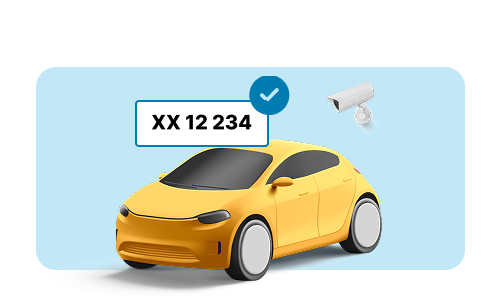
With digital systems from Oparko, this timing is logged automatically via timestamps or camera recognition, providing indisputable evidence in case of a dispute.
Why transparency matters
For landowners, the goal is not just revenue, but compliance and customer satisfaction. “Predatory parking”—where fines are issued the second a car stops—creates bad PR and legal headaches.
By using a system that guarantees a set observation time, you protect your reputation. Oparko integrates systems where every event is logged digitally. If a driver claims they were only there for 2 minutes, but the digital log proves the observation time was 12 minutes, the dispute is resolved instantly with objective data.
Best practices for landowners
If you manage private parking assets, we recommend the following to ensure international best practices:
- Clear Signage: Explicitly state the terms and conditions at the entrance.
- Define Your Buffer: Set a standard observation time (e.g., 5 minutes) in your management software to avoid borderline cases.
- Go Digital: Use a platform that timestamps entry, payment, and enforcement actions.
How Oparko automates compliance
At Oparko, we simplify the complexity of varying international rules. Our platform is designed for private landowners, housing associations, and commercial operators who need flexibility.
With Oparko, you get:
- Configurable Rules: Set observation times that comply with your local laws.
- Automated Documentation: ANPR (camera) or digital warden apps log the exact start and end of the observation period.
- Dispute Reduction: clear evidence significantly reduces successful appeals and chargebacks.
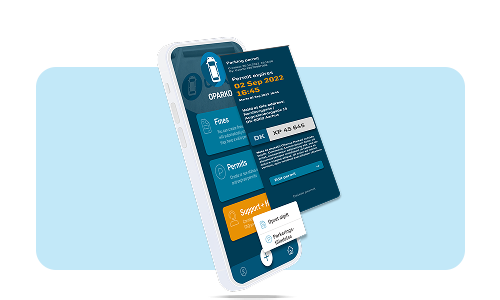
- Centralized Management: Handle permits, payments, and fines in one dashboard.
Conclusion
Observation time is the mechanism that ensures a fair balance between effective enforcement and driver rights. On private land, the responsibility lies with the landowner to set fair rules that comply with local codes of practice.
By implementing a digital solution like Oparko, observation time becomes a documented, automated part of your operations—protecting the driver from unfair fines and the landowner from liability.