


The fine art of parking: Why “between the lines” matters globally
- Your entire vehicle—including wheels—must be completely inside the painted lines of the parking bay.
- Even a single tyre on or over the line can result in a fine, a Penalty Charge Notice (PCN), or towing.
- Bay sizes vary globally—from tight spaces in the UK to wider spots in the US—but the rule applies everywhere.
- Use your mirrors and reference points (like kerbs and signs) to ensure you are parked straight.
- You must only park in designated bays (e.g., Disabled or EV) if you hold a valid permit or badge.
- Violating these rules causes congestion, disputes with other drivers, and poor space utilization.
- Oparko offers digital management for parking areas—including permits, monitoring, and billing.
In short: Park straight, park legally—and leave space for everyone.
Parking in marked bays: The correct technique
Correct parking is not just about etiquette—it is a necessity for ensuring smooth traffic flow and compliance with regulations. With increasing vehicle sizes and the high demand for parking spaces in cities worldwide, understanding how to park with precision is more relevant than ever.
At Oparko, we work daily with digital parking management. We know that clear signage and correct driver behaviour are essential to minimize conflicts and optimize space. Here, we outline the universal rules for parking in a bay, what you can and cannot do, and how to get it right regardless of where you are driving.
The golden rule: “Wholly within the markings”
Whether you are in London, Sydney, or New York, the core rule remains the same: your vehicle must be positioned entirely within the bay lines. While local traffic laws vary, the standard for private land and public roads generally requires the following:
- The entire car must be inside the white lines—this explicitly includes the tyres and often the wing mirrors.
- If one or more wheels are touching or crossing the line, it is widely considered a violation (often termed “not parking wholly within the markings of the bay”).
- In many jurisdictions, specifically the UK and Australia, this is a strict liability offence.
- Vehicles may usually park on a wide boundary line if one exists, but never outside of it.
Violating these rules can lead to fines or vehicle removal. “Straddling” the line blocks the adjacent space, preventing other drivers from using it effectively.
The myth of “Close enough”
Many drivers mistakenly believe that being “mostly” inside the bay is sufficient. However, in modern parking enforcement, accuracy matters. If a tyre is on the paint, you are technically occupying two spaces. This makes it difficult for neighbours to open their doors or manoeuvre out of the spot.
On private land managed by private operators, strict adherence to these boundaries is often enforced to ensure fairness for all users.
Global bay sizes: One size does not fit all
One challenge for international drivers is that parking bay dimensions change depending on the country. It is important to be aware of your vehicle’s size relative to the local standard:
- USA: Standard bays are typically generous, often measuring around 2.7 metres (9 feet) wide by 5.5 metres (18 feet) long.
- UK & Europe: Spaces are historically tighter, often just 2.4 metres wide. This can be a challenge for modern SUVs.
- Australia: Generally falls in between, with standard bays around 2.4 to 2.5 metres wide.
Regardless of whether the spot is tight or spacious, the rule applies: you must fit inside the lines.
How to park straight – Practical tips
- Use your side mirrors as a guide when reversing. Check that your vehicle’s body is parallel to the painted lines.
- Take a moment to readjust. Driving forward and reversing again to straighten up can save you from a fine.
- Avoid parking right at the back limit of the space—leave room so you and others can access the boot/trunk.
- Drive slowly and use reference points like kerbs, other cars, or signs.
- If corner spots are available, choose them—they often offer slightly more room to manoeuvre.
Consequences of poor parking
Parking outside a marked bay is generally prohibited unless signage says otherwise. On public streets, this results in municipal fines. On private land (like shopping centres or residential complexes), it leads to parking charge notices.
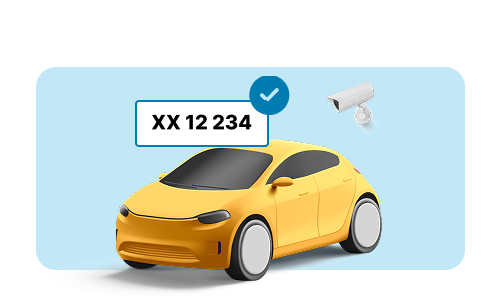
Many private areas now use digital enforcement technology, such as Automatic Number Plate Recognition (ANPR), to monitor compliance. Systems like the Oparko digital platform ensure that rules are enforced fairly and efficiently, protecting the rights of permit holders and ensuring spaces rotate effectively.
Disabled bays and EV charging spots
The rules for special bays are strictly enforced globally. To park in a disabled bay, you must display a valid permit (such as a Blue Badge in the UK/EU or a Handicap Placard in the US). The vehicle must still be parked wholly within the markings.
Similarly, spots designated for Electric Vehicles (EVs) are for charging only. Misusing these spots—known as “ICEing” (when an Internal Combustion Engine car blocks a charger)—is increasingly subject to heavy fines.
Know your distance: Intersections and corners
While parking in a bay is straightforward, street parking rules regarding corners vary significantly by country. Always check local regulations:
- Europe & UK: You generally must not park within 10 metres (approx. 32 feet) of a junction.
- USA: The distance is often shorter but strictly marked, typically 15 to 20 feet (approx. 4.5 to 6 metres) from a crosswalk or intersection.
- Australia: The rule is usually 10 metres from an intersection without traffic lights, and 20 metres if lights are present.
A good rule of thumb globally: if your parking blocks visibility for other drivers or obstructs a hydrant or crossing, it is illegal.
Manage your entire parking area with one digital solution
Correct parking is about creating order and a positive experience for tenants and visitors. With Oparko’s digital parking solution, landowners and administrators can manage their facilities efficiently:
- Centrally assign and manage permits.
- Monitor occupancy with ANPR technology.
- Automate billing and subscriptions.
- Minimize administrative time and errors.
- Access live data and control—365 days a year.
Whether you manage a residential complex, a business park, or a hotel, Oparko offers a modern platform tailored to your specific needs.
Quick summary: The art of parking correctly
- Ensure the entire vehicle is within the painted lines.
- Tyres must not touch or cross the line.
- Violations can lead to fines or towing depending on local laws.
- Use mirrors and reference points to align your vehicle.
- Respect special bays and leave room for others.
With simple techniques and knowledge of the rules, you can walk away from your car worry-free—every time.
Want to know more about intelligent parking management? Visit oparko.com and see how you can get a total overview with just one click.
© Oparko – digital. reliable. user-friendly.