

Smart cities and parking: How are they connected?
As our cities become more populated and traffic grows increasingly complex, municipalities and private actors alike are seeking solutions that balance mobility, sustainability, and the efficient use of urban space. This is where intelligent parking emerges as a key component in the development of future smart cities. Through advanced technology, data, and user-friendly platform systems, intelligent parking solutions contribute to better mobility, reduced congestion, and greener urban environments.
Intelligent parking as a foundation for smart cities
The smart city concept revolves using data and technology to make cities more sustainable, efficient, and livable. In this context, smart city parking plays a central role. As vehicle ownership models and mobility needs evolve, urban infrastructure must keep pace. Modern, intelligent parking systems allow authorities and property managers to manage and optimize parking areas digitally—both to improve traffic flow and to generate new revenue streams.
How do intelligent parking systems work?
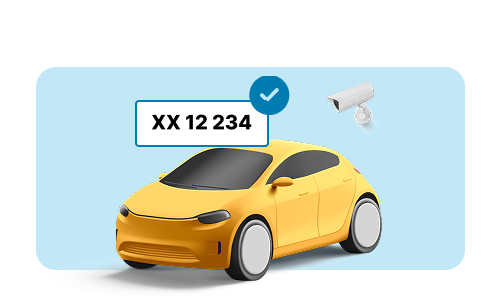
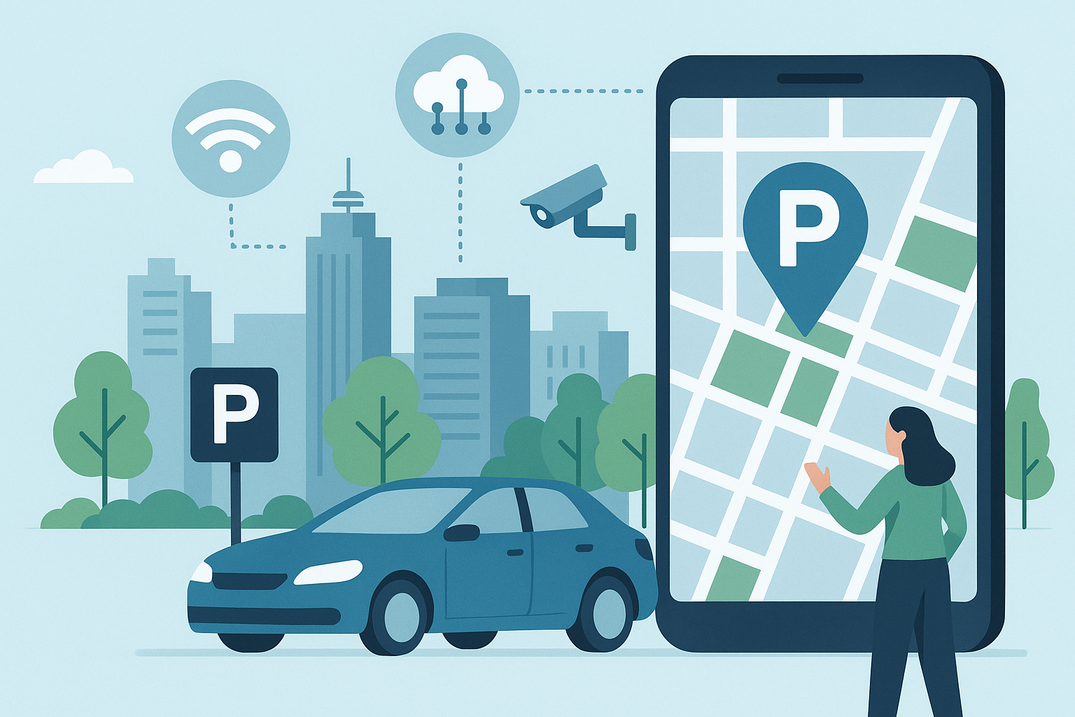
An intelligent parking system utilizes digital technologies such as the Internet of Things (IoT), advanced sensors, and camera monitoring to track and register parking situations in real-time. Via a central platform, such as the one offered by OPARKO, administrators and users can access relevant information with a single click—whether it regards payments, space rental, permits, or enforcement.
A typical system includes:
- IoT-based sensors and video cameras (e.g., LPR/ANPR – License Plate Recognition)
- Parking management via apps with live data and user-friendly access for residents and guests
- Automated billing and digital permit management (whitelisting)
- Camera monitoring and efficient enforcement with minimal administration
This technology provides not only an overview but also flexibility, making parking an active part of the city’s mobility plan.
Data and AI as engines of efficiency
One of the greatest potentials of smart city parking lies in the application of advanced data analytics and Artificial Intelligence (AI). AI-based systems can predict demand at specific times, optimize the allocation of parking spaces, and even suggest dynamic pricing based on real-time data. This means both property owners and drivers get more value from the system: fewer empty spaces standing unused, and less time spent finding a suitable spot. This all contributes to lower CO₂ emissions and less congestion in city centers.
Positive impact on urban environments and sustainability
Intelligent parking impacts more than just logistics. Studies show that up to 30% of traffic congestion in city centers is caused by drivers searching for a place to park. By reducing search time through digital solutions, fuel consumption and emissions are significantly lowered. With the integration of EV charging stations and access to green energy data—such as solar-powered parking facilities—modern parking systems also support the green transition.
Furthermore, a user-friendly parking platform contributes to a smoother daily life for residents, businesses, and guests. Touchless payments, digital permits, and the ability to rent spaces online eliminate paperwork and administrative clutter.
Future urban mobility and integration
The future of urban mobility will not only be electric and digital—it will be integrated. This means parking will play an active role in the transport ecosystem. Cities and technology providers are already working to combine parking with EV charging, energy storage, and mobility services.
With the development of autonomous vehicles (AVs) and self-parking technologies, the car’s role in the urban space is changing. Imagine a vehicle that finds its own spot and departs automatically when the owner summons it via an app. This technology is already being tested in major cities globally and is expected to become more widespread in the coming years.
Digitalization as a business model
For property managers, housing associations, and private landowners, digital parking technology offers significant business potential. With solutions like those offered by OPARKO, it becomes possible to:
- Minimize the administration of parking spaces
- Increase revenue through simple rental features and asset monetization
- Improve overview and control via a unified, digital platform
- Scale the system according to needs—whether for a residential area, commercial property, or hospitality venue
Collaboration across technology providers and municipal actors creates transparent, scalable, and sustainable parking structures that can be adapted to various user needs.
Real-world examples
Several major cities are already well underway with implementing intelligent parking solutions. In Amsterdam, smart parking systems have reduced traffic in the city center by 25%, and Barcelona has achieved lower CO₂ emissions thanks to real-time data and dynamic pricing. Similarly, forward-thinking cities worldwide are working to develop the parking infrastructure of the future—focusing on climate, urban life, and economic efficiency.
Conclusion: An integrated part of smarter cities
Smart cities and parking are inextricably linked. The development of intelligent parking systems is not just a matter of convenience—it is a strategic key to sustainable urban mobility, efficient land use, and a greener future. With user-friendly and reliable solutions like OPARKO, increased value is created for both users and property owners, while simultaneously improving the city’s overall mobility.
The digital parking revolution is in full swing—and parking is no longer just a place to leave the car, but an active part of intelligent urban infrastructure.