

Parking near solid lines: how to avoid fines and dangerous situations
Finding a correct and legal parking space can be a challenge, especially in areas with heavy traffic and limited spots. However, one thing is certain: you must be particularly aware of solid lines—also known as continuous dividing lines. Violating parking rules near a solid line can lead to fines and create dangerous situations on the road. This guide equips you with practical and legal advice so you can avoid penalties and contribute to safe traffic flow globally.
What is a solid line?
A solid line is a continuous white or yellow line on the roadway. It is universally used to mark areas where changing lanes or parking is dangerous or prohibited. Solid lines are typically placed at critical traffic points, such as near intersections, exits, pedestrian crossings, or cycle lanes, to ensure clear passage and sufficient visibility for other road users.
Because these lines manage traffic flow and safety, the rules regarding parking near them are strictly enforced in almost every jurisdiction.
The “3-meter rule”: a global safety standard
While specific laws vary by country, a widely accepted safety standard—and a strict law in many European countries and Australia—is the 3-meter rule.
The rule states: You must not stop or park your vehicle if there is less than 3 meters (approx. 10 feet) between your car and the solid line, unless a dashed line separates your vehicle from the solid line. This distance is measured from the nearest point of your car to the line.
Why 3 meters? This width ensures that emergency vehicles, such as fire trucks and ambulances, can pass your parked car without being forced to cross the solid line into oncoming traffic (which is illegal and dangerous).
Country-specific variations: what to look for
While the 3-meter safety clearance is a good rule of thumb everywhere, local laws have specific markers you should know:
- United Kingdom: Look out for “Double White Lines.” It is generally illegal to stop on a road marked with double white lines (even if one is broken on your side).
- United States: Pay attention to painted curbs. A yellow or red curb indicates a fire lane or no-parking zone regardless of the road width. Additionally, most states require a specific clearance width (often 10-12 feet) for moving traffic.
- Australia & Europe: The 3-meter distance from a solid dividing line is typically a strict legal requirement, enforceable by law enforcement and parking wardens.
Why are these rules important?
Parking restrictions near solid lines are not just about bureaucracy; they are about traffic safety. Parking too close to a solid line can:
- Block visibility of traffic signals and road signs.
- Make it difficult or impossible for large vehicles (buses, trucks) and cyclists to pass safely.
- Create dangerous situations where moving traffic is forced into the opposite lane to get around your vehicle.
Common safe distance zones
In addition to the solid line rule, there are universal “no parking” zones around specific road features. While distances vary by local authority, keeping these clearances will generally keep you safe:
- Pedestrian crossings: Keep at least 5 meters (16 feet) clear to ensure drivers can see pedestrians stepping onto the road.
- Intersections: Keep at least 10 meters (32 feet) clear to allow turning vehicles enough space.
- Bus stops: Keep at least 12 meters (40 feet) clear to allow buses to pull in and out safely.
- Cycle lanes: Avoid parking near the entry or exit points of cycle lanes.
Additionally, always park in the direction of traffic flow and never on median strips or safety islands.
The cost of parking incorrectly
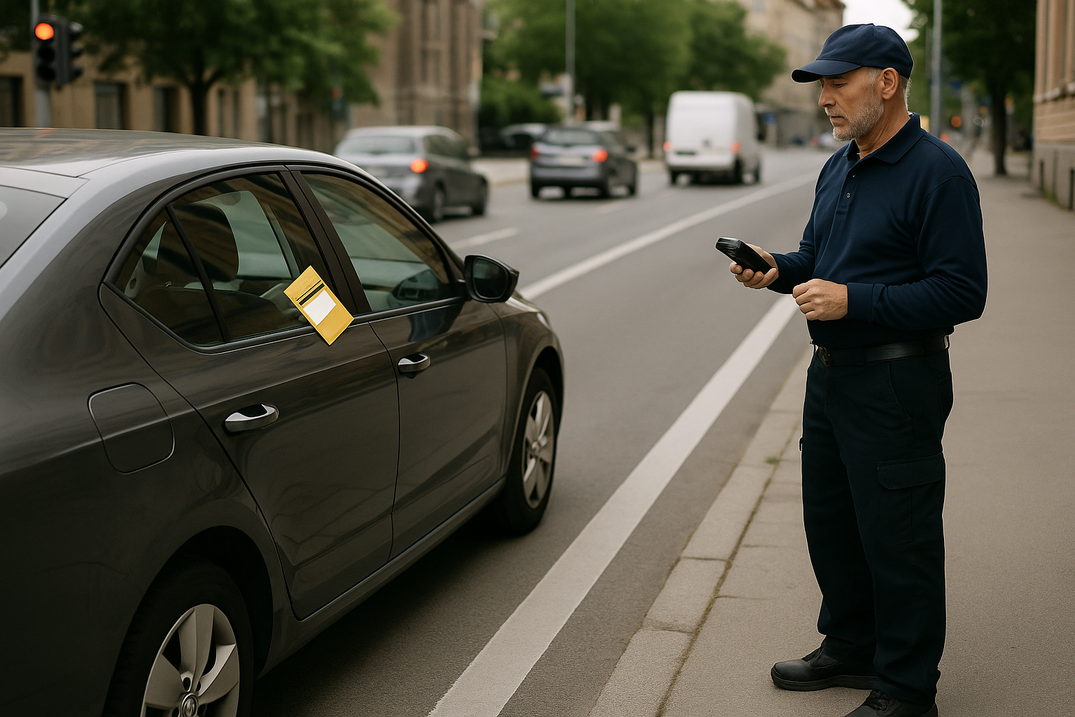
Parking enforcement in these safety zones is strict. Whether detected by a passing police patrol, a parking warden, or an automated camera car, the fines for obstructing traffic flow near solid lines are often substantial.
Appealing these fines is rarely successful if the road markings are visible, as the violation is easily proven by measuring the distance between the vehicle and the line.
Tips for safe parking
You can save yourself and others a lot of trouble by following a few simple guidelines:
- The golden rule: Always leave at least 3 meters of space between your car and any solid line.
- Check the lines: If there is a broken (dashed) line between you and the solid line, it is usually safe to park, provided you are within a designated bay.
- Respect faded markings: Courts in many countries have ruled that drivers must obey road markings even if they are worn or faded.
- When in doubt: If you aren’t sure if a fire truck can pass without crossing the line, find another spot.
Effective parking management with Oparko
If you are a parking lot administrator—for example, in a housing association, as a landowner, or a business owner—it is crucial that safety rules, such as those regarding solid lines and fire lanes, are easy to enforce.
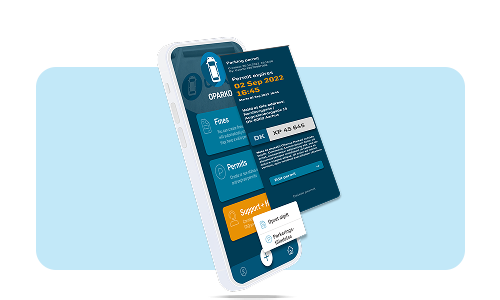
At Oparko, we offer a digital parking solution that gives you full control and overview of your parking area. You can manage permits, enforcement, and payments in one place—all through a user-friendly platform.
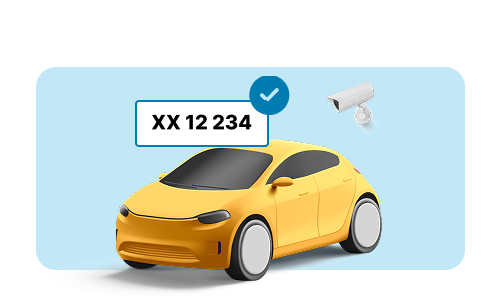
- Automatic number plate recognition (ANPR): Seamless monitoring of vehicles entering and exiting.
- Digital enforcement: Tools to ensure safety zones are respected without physical confrontation.
- Automated billing and permit management: Reduce administrative work.
- Tailored solutions: Designed for commercial, retail, and residential areas.
With Oparko’s platform, you get more than just a parking system—you get a modern, sustainable solution that ensures fewer parking violations, higher revenue, and minimal administration.
Using technology to prevent parking errors
Digital parking management makes it far easier to enforce safety zones like the 3-meter distance to solid lines. Using camera surveillance and automated data collection, you can ensure rules are followed without spending resources on constant manual patrols.
This is especially valuable in high-traffic areas, such as shopping centers, residential complexes, or office parks, where blocking a solid line or fire lane can quickly create chaos and frustration.
Conclusion – respect the rules and create safe traffic
Solid lines mark critical areas in traffic, which is why parking near them is strictly regulated globally. Ensure you know the distance requirements and choose your parking spots wisely. It is good for traffic safety—and your wallet.
If you are responsible for a parking lot or operate a larger parking facility, consider a digital parking solution like Oparko. With a complete overview, effective management, and fewer parking violations, your daily operations become easier—and your parking areas safer.
Read more at oparko.com – get the overview with just one click.