

Traffic laws vs. private parking rules: Navigating compliance in a complex world
TL;DR – Key takeaways for international parking management
- Stopping vs. Parking: Definitions vary globally—some regions use strict time limits (e.g., 3 minutes), while others define it by activity (loading vs. storing the vehicle).
- Universal Safety Principles: Blocking driveways, sidewalks, and emergency access is universally prohibited, though specific distances from junctions vary by country.
- Orientation Matters: Parking direction (left vs. right) depends on the country’s traffic flow laws and local safety ordinances.
- Public Law vs. Private Contract: Public roads are governed by traffic acts; private land is often governed by contract law requiring specific signage.
- Digital Enforcement is Key: Because rules vary so drastically, using flexible digital platforms like OPARKO ensures compliance with local regulations through ANPR and custom rule settings.
Finding a parking spot is a universal challenge, but managing one is even more complex. Whether you are a property manager, a housing association board member, or a private parking operator, understanding the nuances of traffic laws versus private parking rules is essential.
What is legal in one country may result in a fine in another. This guide breaks down the fundamental concepts of international parking compliance to help you manage your facilities effectively and avoid legal pitfalls.
The confusion between “stopping” and “parking”
One of the most common sources of disputes in parking management is the legal distinction between “stopping” and “parking.” This definition changes depending on where your property is located:
- Time-Based Definitions: In some jurisdictions, the law draws a hard line based on time. For example, “stopping” might be defined as standing still for less than 3 minutes, while anything exceeding that is considered “parking,” regardless of whether the driver is behind the wheel.
- Activity-Based Definitions: In other regions, such as parts of the UK and Australia, the distinction is based on activity. “Waiting” or “Standing” may be permitted for dropping off passengers or loading goods, whereas “Parking” implies leaving the vehicle unattended.
The Takeaway: As a property manager, your enforcement software must be flexible enough to account for these local time thresholds to avoid issuing invalid fines.
Positioning and safety: Universal rules vs. local specifics
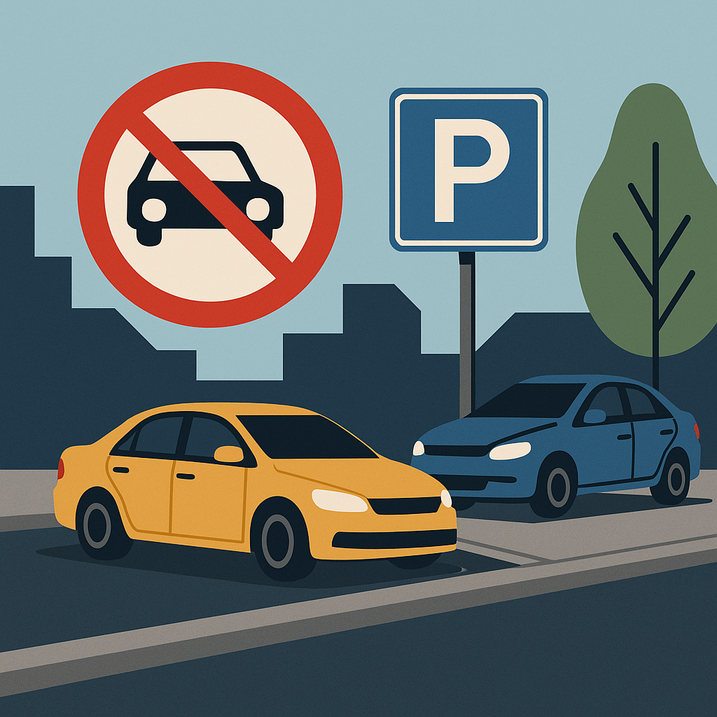
While specific measurements vary, the philosophy of safe parking remains consistent: never park in a way that endangers others or blocks traffic flow.
- Distance from Junctions: Most traffic acts prohibit parking near intersections to preserve visibility. However, the required distance varies significantly—from 5 meters in some European countries to over 15 or 20 feet (approx. 6 meters) in the US and UK.
- Orientation: The general rule is to park in the direction of traffic. In right-hand traffic countries, this means the right curb; in left-hand traffic countries (like the UK and Australia), this means the left. Parking against the flow of traffic is a common offense worldwide due to the danger of pulling out into oncoming cars.
- Protected Zones: Sidewalks, bike lanes, and disability spaces are almost universally protected. Violations in handicap spaces often carry the most severe penalties.
Public statutes vs. private land enforcement
A crucial distinction for operators is the legal basis for enforcement.
Public Roads: On public streets, parking is governed by national Traffic Acts and enforced by police or municipal wardens.
Private Land: On private property (shopping centers, residential complexes, office parks), enforcement is typically based on Contract Law. By entering the land and parking, the driver enters into a contract with the landowner.
For this contract to be valid, clear signage is mandatory. The signs must explicitly state the terms and conditions (e.g., “Permit Holders Only” or “Max 2 Hours”). Without clear signage, issuing a parking charge notice may not be legally binding.
Enforcement and fines: The cost of non-compliance
The financial consequences of illegal parking vary widely. Fines can range from modest amounts to significant penalties, particularly in major metropolitan areas.
- Escalating Penalties: In many jurisdictions, fines are doubled for serious offenses, such as blocking emergency routes or using a handicap space without a valid permit.
- Repeat Offenses: Modern enforcement systems can track repeat offenders. In some regions, multiple fines can be issued for the same vehicle if it remains illegally parked over several days.
A smarter approach: Digital parking management
Because “common knowledge” about parking rules is often incorrect or does not apply to private land, relying on manual enforcement or outdated systems is risky.
OPARKO offers a digital solution that bridges the gap between complex local laws and private management needs:
- Customizable Rules: configure the system to match your specific local regulations (e.g., setting a 2-minute vs. 10-minute grace period).
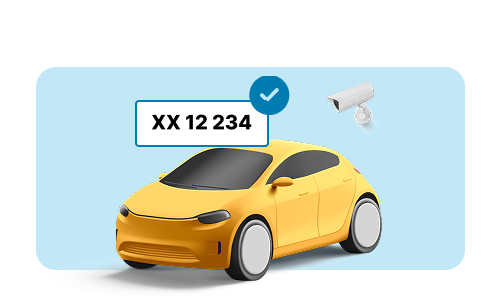
- ANPR Technology: Automated Number Plate Recognition ensures impartial, accurate enforcement 24/7 without the need for physical permits.
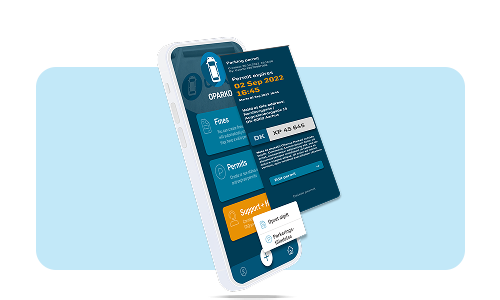
- Digital Whitelisting: Easily manage residents, employees, or guests through an online portal, eliminating the need for paper passes.
- Revenue Generation: Turn vacant spots into revenue by allowing paid parking during off-peak hours, handled entirely through the app.
Summary: Adaptability is key
Traffic laws are rigid, but private parking management requires flexibility. By understanding the difference between stopping and parking, respecting local safety zones, and utilizing digital tools, you can ensure your property remains accessible, safe, and profitable.
Move away from the chaos of manual enforcement. Experience the clarity of digital management.
Learn more about how OPARKO adapts to international parking needs at www.oparko.com.