

Parking trailers and campervans: rules, challenges, and smart solutions
Parking trailers, caravans, and campervans requires more than just physical space—it demands a clear understanding of local regulations, community rules, and practical logistics. Whether you are a private landowner, a property manager, or a board member of a Homeowners Association (HOA), this guide will help you navigate the complexities of managing large leisure vehicles.
The universal challenge: leisure vehicles in shared spaces
Across the globe, the popularity of RVs, caravans, and trailers is rising. However, these vehicles present a unique challenge for residential areas. They take up multiple parking spots, block sightlines, and can negatively impact the aesthetic appeal of a neighborhood.
Because public street parking is becoming increasingly restricted, the pressure shifts to private land and residential complexes. Understanding the distinction between public laws and private community rules is essential for effective management.
Global restrictions: how different regions handle the issue
While specific traffic laws vary, the trend in major English-speaking markets is moving toward stricter enforcement on public roads, which directly impacts private residential parking management.
- United Kingdom (UK): On public roads, trailers must not cause an “unnecessary obstruction.” However, the bigger issue lies in residential estates, where Deed Covenants often explicitly forbid parking caravans or boats in driveways or on the street in front of homes to maintain the neighborhood’s appearance.
- United States (USA): Many cities enforce a “72-Hour Rule,” prohibiting vehicles from remaining in one spot on public streets for longer than three days. Additionally, most Homeowners Associations (HOAs) have strict bylaws banning the visible storage of RVs and trailers, requiring them to be garaged or stored off-site.
- Australia: There is a strict legal distinction between “parking” and “camping.” While parking a vehicle is generally legal subject to time limits, sleeping in it on a public street is often prohibited by council by-laws. In apartment complexes, Strata schemes usually ban large vehicles from visitor parking zones.
These variations make it crucial for property managers to have flexible systems that can adapt to local demands while enforcing community standards.
Managing parking on private land and estates
For private roads, apartment complexes, and gated communities, the rules are set by the landowner or the community association. This is where the conflict often arises: Residents need to park their caravan temporarily to load it before a trip, but neighbors complain about long-term storage.
It is generally not permitted to turn a shared residential parking lot into a permanent storage facility for leisure vehicles. However, a total ban can be frustrating for residents.
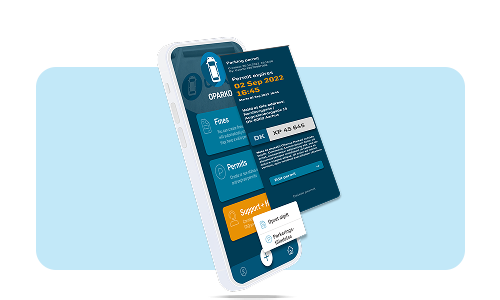
The solution lies in digital administration. By using a parking management platform like OPARKO, associations can issue temporary “loading/unloading permits” (e.g., valid for 24 hours) while strictly enforcing bans on unauthorized long-term storage.
Long-term storage vs. temporary parking
On public roads, long-term storage of trailers and non-motorized vehicles is rarely permitted. Most local authorities strictly limit how long a detached trailer can remain on the street.
If you or your tenants require long-term storage, dedicated facilities or secure private lots are the only viable options. For residential property managers, allowing long-term storage of RVs in visitor spots often leads to a lack of space for actual guests.
Property managers facing these issues can use digital tools to designate specific “storage zones” that can be rented out to residents, generating revenue while keeping prime parking spots free for daily use.
Best practices for compliance and safety
- Check the Deed or Bylaws: Before parking a trailer or RV in a residential driveway or lot, always check the HOA rules, Strata bylaws, or restrictive covenants.
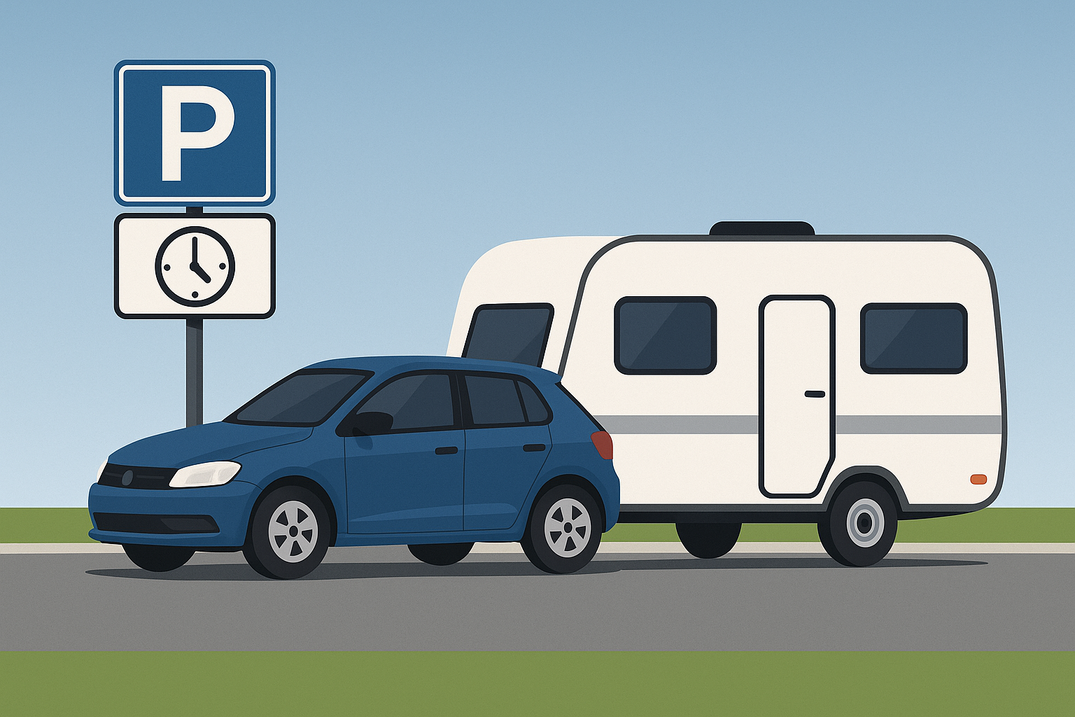
- Respect Time Limits: Public streets often have time limits (e.g., 24 to 72 hours) for large vehicles. Ignoring these often results in towing.
- Safety First: Never park in a way that obstructs emergency vehicle access, fire hydrants, or the visibility of other drivers.
- Digital Permits: If managing a property, move away from physical paper permits. Use a digital system to track exactly which vehicles are authorized to be on-site and for how long.
Smart management: gain control with OPARKO
With OPARKO’s digital parking solution, you can effortlessly manage the complexities of trailer and RV parking on private land—all from one platform.
Our system empowers property managers and HOAs to:
- Issue temporary digital permits for residents needing to load/unload campers.
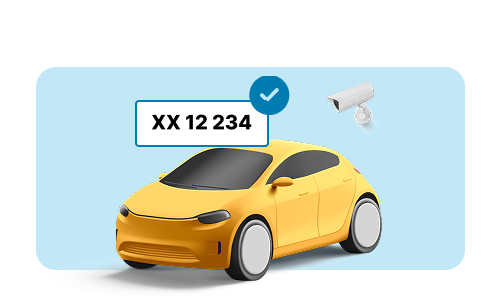
- Monitor shared areas using ANPR (Automatic Number Plate Recognition) to identify unauthorized storage.
- Rent out specific “oversized vehicle” spots for monthly fees.
- Handle administration digitally, reducing conflicts between neighbors and management.
Customizable solutions mean the platform can be tailored to residential complexes, business parks, or mixed-use developments, ensuring rules are enforced fairly and efficiently.
Frequently asked questions
How long can I park a trailer on a public street?
This varies by local law, but it is typically between 24 and 72 hours. In many areas, detached trailers are not allowed to be parked overnight on public roads.
Can I sleep in my campervan while parked on the street?
Generally, no. Most municipalities distinguish between “parking” and “camping.” While the vehicle may be legally parked, sleeping inside it often violates local by-laws regarding illegal camping.
Can an HOA ban me from parking my RV in my own driveway?
Yes. In many countries, particularly the US and UK, if you signed a covenant or agreed to HOA bylaws that restrict recreational vehicles, those rules are legally binding and enforceable.
How do I stop non-residents from storing trailers on my private land?
You need clear signage and an enforcement strategy. Digital solutions like OPARKO allow you to whitelist authorized vehicles and identify intruders immediately.
By combining a clear understanding of the rules with modern technology, property owners can eliminate parking frustrations. OPARKO provides the tools needed to manage residential parking efficiently, ensuring space is used correctly.
Ready to take control of your parking area?
It’s time to digitalize. Contact OPARKO today for a solution tailored to your needs.