

Mobility as a Service (MaaS) and the role of parking: the key to a seamless transport experience
As our cities evolve towards smarter and more sustainable transport systems, integrated solutions like Mobility as a Service (MaaS) are becoming crucial for future transport infrastructure. A central yet often overlooked element in this integration journey is parking. Despite the ambition to reduce private car usage, parking continues to play a vital role in mobility solutions—especially as the connecting link between different modes of transport.
What is Mobility as a Service (MaaS)?
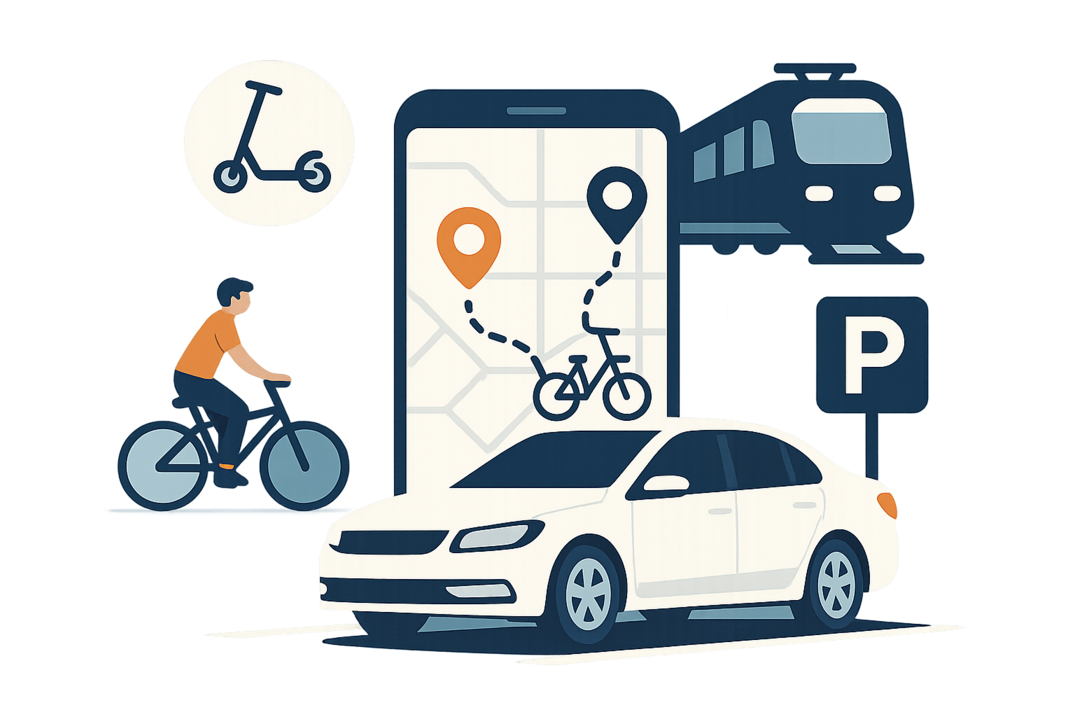
Mobility as a Service (MaaS) is a concept that aggregates multiple transport modes—such as public transport, car-sharing, e-scooters, bike-sharing, and taxis—into a single digital platform. Users can plan, book, and pay for their entire journey in one place, eliminating the need for separate tickets, apps, or payment methods. The goal is to offer a complete, customer-centric, and flexible transport experience that can compete with, and in many cases replace, the need for owning a private car.
With MaaS, users can tailor their journeys based on need, time, and cost, supporting the shift towards more sustainable transport modes and reducing urban congestion. Overall, MaaS creates an integrated transport solution that unites mobility and technology to solve some of the biggest challenges in modern urban mobility.
Why is parking important in MaaS?
Although the aim of MaaS is often to reduce reliance on private cars, the car will remain a part of daily life for many—particularly in suburbs and rural areas. Therefore, parking plays a central role as the connecting link between private transport and public mobility (often referred to as “Park and Ride”). A seamless integration of parking into the MaaS system is essential to create an effective door-to-door travel experience.
By integrating parking directly into MaaS platforms—with real-time information, online booking, and digital payment—users avoid wasting time and energy finding a parking space. It also enables quick transitions to other transport modes like trains or car-sharing solutions. Ultimately, this strengthens MaaS goals of reduced congestion and lower CO2 emissions, as time spent circling for parking is significantly minimized. Furthermore, it helps drivers avoid congestion charges and Ultra Low Emission Zones (ULEZ) in city centers.
What does MaaS parking look like in practice?
Imagine planning a journey via a mobile app where you book a parking space near a transit hub and purchase your train ticket simultaneously—all in one flow. You arrive, park your car, continue by train, and on your way home, you receive a notification that your parking payment has been handled automatically. This seamless journey is the core of a functional MaaS parking solution.
To achieve this, the following elements are essential:
- Real-time data on available parking spaces so users avoid unnecessary driving.
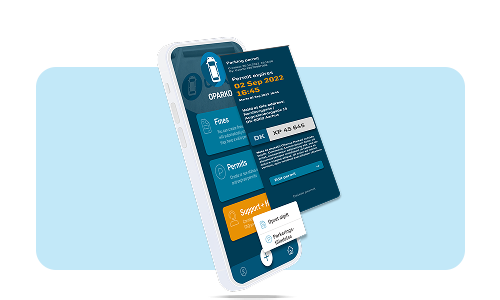
- Digital reservation and payment capabilities.
- Integration with public and private transport systems, making parking a natural part of the journey.
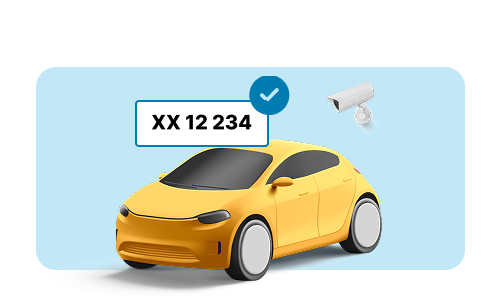
- Automatic Number Plate Recognition (ANPR/LPR), so the user doesn’t have to worry about enforcement or physical tickets.
At OPARKO, these functionalities are the foundation of our digital parking solutions. With our system, private landowners, residential associations, and commercial clients get a central platform that consolidates administration, permits, enforcement, and payment in one place—efficiently, digitally, and sustainably.
Challenges in integrating parking into MaaS
While the potential is vast, effective integration of parking into MaaS requires close collaboration across stakeholders. Data exchange must occur in real-time via open APIs, and both private parking operators and public transit authorities must be willing to cooperate.
Additionally, integration raises questions regarding data security and user privacy. When travel data, payment information, and movement patterns are shared between different actors, clear standards (such as GDPR compliance in Europe and data sovereignty standards globally) and transparent processing are crucial.
The lack of common technical standards for digital parking solutions is also a barrier. Therefore, companies like OPARKO work to offer flexible yet reliable systems that can easily integrate into larger mobility ecosystems.
International examples and smart cities
Several cities worldwide have already taken steps to integrate parking into their MaaS platforms. In Helsinki, Finland, the globally recognized “Whim” app functions as a unified service where users can plan trips with public transport, taxis, bikes, and cars, including parking booking.
Similar initiatives are seen in the UK, such as in the West Midlands and Manchester, where “smart travel” initiatives aim to integrate bus, tram, and parking data. In the US, cities like Los Angeles and San Francisco are piloting platforms that combine “Park and Ride” logic with ride-hailing services to reduce downtown traffic. These examples show that parking is not just a static function, but a dynamic part of the future integrated transport solution.
OPARKO – Your partner in digital parking
At OPARKO, we work every day to make parking an active driver for better mobility. Our platform offers:
- Automatic Number Plate Recognition (ANPR/LPR) and camera monitoring
- Easy administration through a user-friendly control platform
- Efficient rental and payment handling for parking spaces
- Increased revenue and sustainable operations for landowners and businesses
We tailor solutions for hotels, real estate companies, residential associations, and others wishing to integrate modern, digital parking management—regardless of the size of the lot. With our system, you get an overview with one click and the opportunity to connect your parking solution directly to the mobility networks of the future.
The way forward: parking as an intelligent mobility node
Parking within the context of MaaS is far from just a question of where the car should stand. It is about making every journey smoother, more sustainable, and more efficient. When parking is intelligently integrated into the mobility infrastructure, it becomes a central element in achieving cities with less congestion, cleaner air, and greater freedom of movement.
For the future of transport, it is not just important where you are going—but also how the entire journey connects. With Mobility as a Service and platform-based parking services from OPARKO, it is now possible to unite all links in the modern mobility flow.
It’s not just smarter. It’s necessary.