

The international driver’s guide to parking discs in Denmark
Quick overview
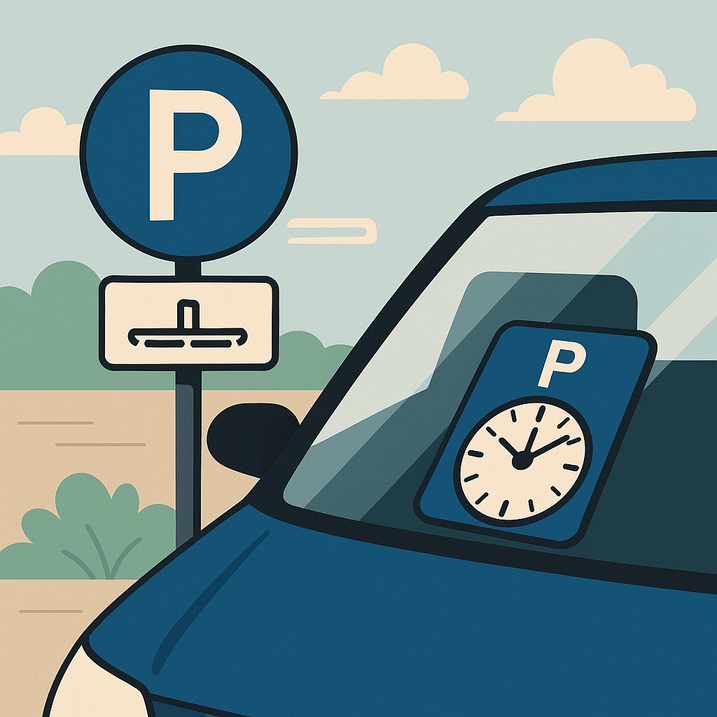
- You must use a visible, correctly set parking disc (manual or electronic) wherever signage requires it (e.g., “2 timer” with a disc symbol).
- The disc must be set to the next quarter-hour after your arrival (e.g., arrival 14:07 = set to 14:15).
- Only one parking disc may be visible in the car – displaying two (even if one is electronic and one is manual) can result in a fine.
- Electronic discs are legal and recommended; they set automatically, but you must ensure the battery works.
- The disc must be placed in the bottom right corner of the windshield (passenger side).
- Private parking areas may have stricter rules – always read the signage carefully.
- Digital systems like Oparko help property owners and administrators with easy control and smarter parking management.
In short: To avoid fines, use a parking disc, set it to the next quarter-hour, and place it correctly in the bottom right corner.
The complete guide: Rules, placement, and international differences
For visitors from the UK, US, or Australia, the Danish “p-skive” (parking disc) system can be confusing. Unlike systems that rely solely on meters or Pay & Display apps, Denmark often offers free, time-limited parking (e.g., “Free for 2 hours”), but only if you prove your arrival time using a parking disc. Failure to display the disc, or setting it incorrectly according to Danish standards, will result in a fine—even if you haven’t exceeded the time limit.
This guide explains the specific Danish rules, how they differ from German or UK standards, and how to stay compliant.
What is a parking disc?
For travelers from the US or Australia where this concept is rare: A parking disc is a clock device placed in your windshield. It does not pay for parking; rather, it acts as a timestamp. If a sign says “2 hours free with disc,” you set the clock to your arrival time to prove how long you have been parked.
The golden rule: The “quarter-hour” setting
This is where most international visitors get fined. Denmark uses a specific “Quarter-Hour” rounding rule that differs from neighboring countries.
The Danish Rule: You must set the disc to the next quarter-hour after your arrival.
- Example: If you arrive at 14:07, you must set the disc to 14:15.
- Example: If you arrive at 14:16, you must set the disc to 14:30.
Common Mistakes to Avoid:
- Don’t use exact time (UK style): If you set the specific minute (e.g., 14:07), it is technically incorrect, though sometimes tolerated. The law specifies the next quarter-hour.
- Don’t use the half-hour rule (German style): In Germany and many EU countries, you round up to the next half-hour. If you do this in Denmark (e.g., setting 14:30 when you arrived at 14:07), you will be fined for setting the time too far ahead.
Placement of the disc
Danish law is strict regarding placement to ensure parking wardens can easily check the time.
- Position: The disc must be placed in the bottom right corner of the front windshield (the passenger side).
- Visibility: It must be clearly visible from the outside.
- The “One Disc” Rule: You are only allowed to have one parking disc visible. If you install an electronic disc, you must remove the old manual paper/plastic disc. Having two visible dates/times is illegal and results in a fine.
Electronic discs: The safe choice for travelers
Electronic parking discs are fully legal in Denmark and are highly recommended for international drivers to avoid “mental math” errors. These devices detect when the car engine stops and automatically set the time to the correct Danish standard (next quarter-hour). They also handle the switch between summer and winter time automatically.
If you rent a car in Denmark, check if an electronic disc is already installed in the bottom right corner.
Private vs. public parking rules
The rules above apply to public roads and municipal parking. However, Denmark has many private parking areas (shopping centers, private lots) managed by private companies. While they generally follow the traffic act, they may have stricter signage or require digital registration via an app.
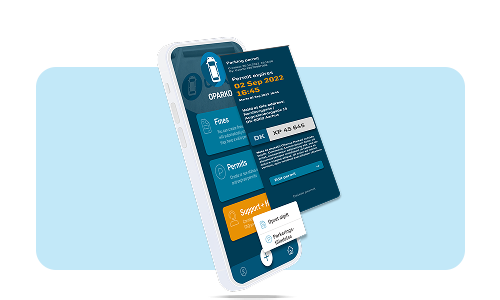
Always read the black or blue signs at the entrance of a parking lot. If the area is managed by a digital solution like Oparko, there may be options for digital registration via tablet or app, ensuring compliance without the need for a physical disc.
How Oparko optimizes parking management
At Oparko, we provide digital parking solutions that integrate the latest technology to create secure and manageable parking conditions for international and local users alike. Our central digital platform allows property owners to:
- Manage permits, control, payment, and rentals in one place.
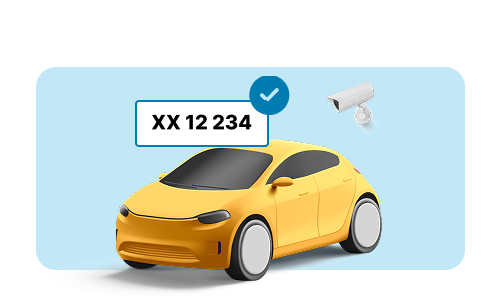
- Access live data and full monitoring via License Plate Recognition (ANPR).
- Use user-friendly features for administration and billing.
- Adapt the system to specific needs—whether for hotels, office buildings, or housing associations.
Summary checklist for international drivers
- Check the sign: Does it require a “P-skive”?
- Set the time: Round up to the next 15 minutes (e.g., 10:05 becomes 10:15).
- Check placement: Bottom right corner of the windshield.
- One disc only: Ensure no other discs are visible.
By following these simple rules, you can enjoy your stay in Denmark without the frustration of parking fines. For property owners looking to modernize their parking compliance, visit Oparko.com.