

Parking near intersections: Understanding corner clearance & safety zones
TL;DR – Safe parking distances at junctions and corners
International traffic safety standards generally prohibit stopping or parking close to an intersection, crossing, or corner. While specific distances vary by country (often between 5 and 10 meters), the goal is universal: ensuring visibility and preventing accidents.
This “Corner Clearance” rule exists to allow drivers to see oncoming traffic and to give larger vehicles space to turn. Similar restrictions apply to pedestrian crossings, cycle paths, and fire hydrants. Violating these rules can lead to fines and towing, even on private land or unmarked roads.
Private landowners and housing associations can enforce these safety zones effectively using OPARKO’s digital parking system, which offers automated control, clear signage, and administration – ensuring your property remains safe and accessible.
Read the full guide to understand the international standards for parking near corners – and find a solution for your residential or commercial property.
What is the “Corner Clearance” rule?
In most jurisdictions, it is illegal to park or stop a vehicle within a specific distance of a junction. In many parts of Europe, the UK, and Australia, this is known as the 10-meter rule. In other regions, such as parts of North America or Central Europe, the minimum distance may range from 5 to 9 meters (approx. 15-30 feet).
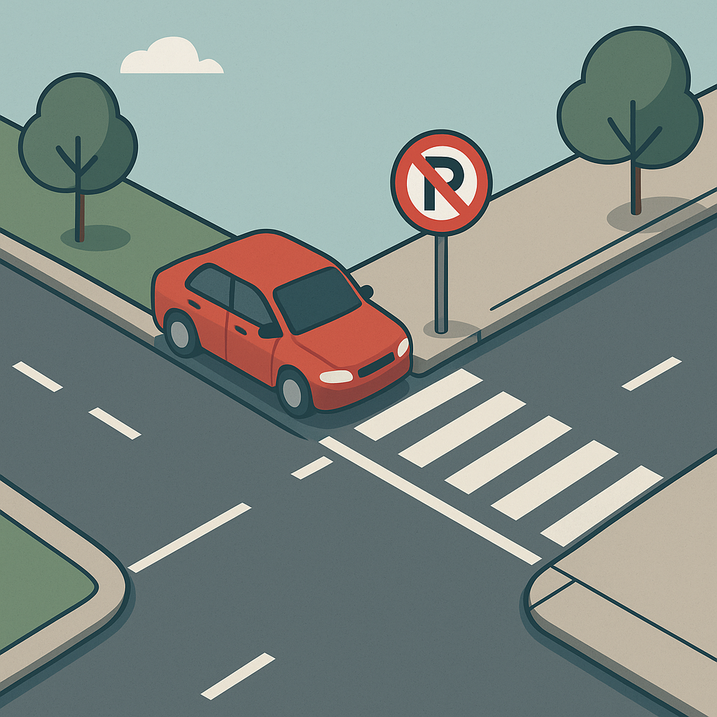
The rule applies to all types of intersections, including T-junctions, crossroads, roundabouts, and exits from cycle tracks. The prohibition usually starts from the point where the curb lines of the intersecting roads meet.
This distance is critical because it ensures that drivers, cyclists, and pedestrians have a clear line of sight, and that emergency vehicles or delivery trucks are not blocked by parked cars when turning corners.
How is the distance measured?
A common source of confusion is determining exactly where the “no parking” zone begins. Generally, the distance is measured from the point where your road meets the intersecting road (the corner of the curb).
Imagine the corner where the curb curves around to the next street. You must measure the required distance (e.g., 10 meters) from that corner point along the road to where you intend to park. This applies regardless of whether the intersecting road is a main highway, a side street, or a dedicated cycle path.
While some cities use visual markings—such as yellow curbs, zigzag lines, or painted triangles—to indicate the prohibited area, the rule applies legally even if there are no physical signs or road markings present.
Why is this rule important?
Parking restrictions near corners are not designed to be inconvenient; they are vital for road safety. Parking too close to an intersection blocks visibility for other road users. This significantly increases the risk of accidents, particularly for vulnerable groups like children and the elderly, who may be hidden behind a corner-parked vehicle.
Furthermore, larger vehicles such as fire engines, garbage trucks, and buses require a wider turning radius. If a car is parked on the corner, these essential services may be unable to pass, causing delays or forcing them into oncoming traffic.
Parking near crossings and driveways
Corner clearance is not the only distance rule to be aware of. Depending on local laws, specific zones must be kept clear:
- Cycle Paths: Never park directly in front of or immediately before a cycle path exit. A safe distance (often 5 meters) is required to ensure cyclists are visible.
- Pedestrian Crossings: You typically cannot stop or park on, or within 5 meters (approx. 16 feet) before, a zebra crossing or crosswalk.
- Solid Lines: Parking opposite a solid white line is often prohibited unless there is sufficient space (usually 3 meters) for traffic to pass between your car and the line.
- Sidewalks & Verges: Parking fully or partially on pavements (sidewalks) or cycle lanes is strictly prohibited in most jurisdictions.
- Bus Stops: A clearance of 10–12 meters is standard to allow buses to pull in and out safely.
- Fire Hydrants: A clearance of 3–5 meters is universally required for emergency access.
These rules apply instantly—stopping “just for five minutes” is still a violation that creates a hazard.
Frequently asked questions
How can I estimate 10 meters without a tape measure?
Start by identifying the corner of the intersecting road. An average compact car is about 4.5 meters long. Therefore, visualizing two car lengths from the corner usually gives you a safe margin of roughly 9–10 meters.
Does this apply to private roads or shared driveways?
Yes. If the road is accessible to public traffic or is a shared residential area, safety rules generally apply. Property owners have a duty of care to ensure that intersections within their private land (like business parks or residential complexes) are safe to navigate.
What if other drivers are parking illegally?
You are responsible for your own vehicle. The fact that other cars are parked illegally near a corner does not make it legal for you to join them. “Everyone else was doing it” is not a valid defense against a fine or liability in an accident.
Are there always signs?
No. While some areas use yellow lines or “No Stopping” signs, the corner clearance rule is a statutory traffic law in most countries. It applies by default, even in the absence of signage.
Visualizing the danger zones
To ensure safety on your property, it helps to visualize these zones. OPARKO provides guidance on setting up these rules, including:
- Diagrams showing the 10-meter measurement from a junction corner.
- Examples of illegal positioning at T-junctions.
- Safety zones required around pedestrian crossings.
- How to mark clearance zones for cycle path exits.
These principles are excellent for establishing clear rules in private housing associations or commercial parking lots.
Enforcement and control
On public roads, police or municipal wardens enforce these rules. However, on private land—such as residential complexes, office parks, or shared driveways—the responsibility often falls on the landowner.
Managing this manually can be difficult and confrontational. This is where OPARKO helps. Our digital parking solution allows private landowners to enforce safety zones like the “10-meter rule” through automated control and clear, professional signage, ensuring that emergency routes and visibility lines are respected.
A digital solution for parking management
OPARKO offers modern parking management that streamlines operations for housing associations, hotels, businesses, and private landowners. Our central platform allows you to handle everything from permit management to enforcement in one place.
With features such as:
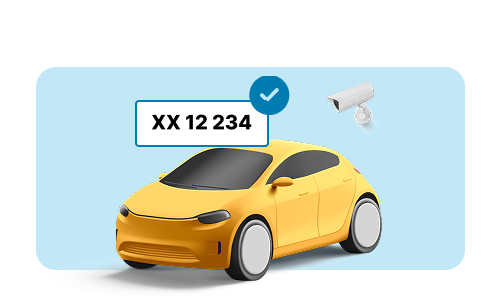
- Automatic Number Plate Recognition (ANPR)
- User-friendly platform for administration and control
- Digital patrolling and enforcement tools
- Automated billing and live data access
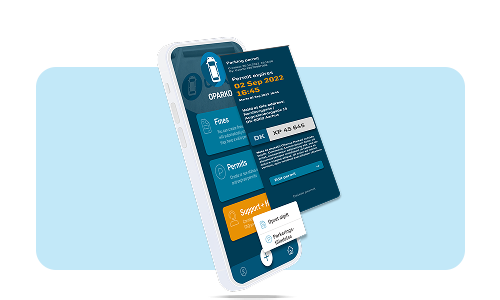
- Visual guidelines and digital permits for residents and guests
… you can ensure that safety distances and parking rules are respected without the hassle of manual monitoring.
Conclusion: Safety is universal
Whether the local requirement is 5 meters or 10 meters, keeping corners and intersections clear is more than just a rule—it is a critical safety measure. Respecting these zones prevents accidents and keeps traffic flowing.
With OPARKO’s digital parking solution, you can take control of your parking area—without having to handle fines or manual checks yourself. Contact us today to hear how we can help you create a safer, more efficient parking environment.
Read more at oparko.com and discover how we make parking simple—one platform, full control.