

The 3-meter rule and parking on narrow roads: What you need to know
When it comes to parking in residential areas, particularly on neighborhood lanes and narrow streets, there is a guideline that is often overlooked—yet it has a major impact on road safety. It is widely known as the “3-meter rule” for parking. This principle plays a crucial role in how parking should be managed on narrow road stretches and what you, as a resident or property manager, need to be aware of.
What is the 3-meter rule?
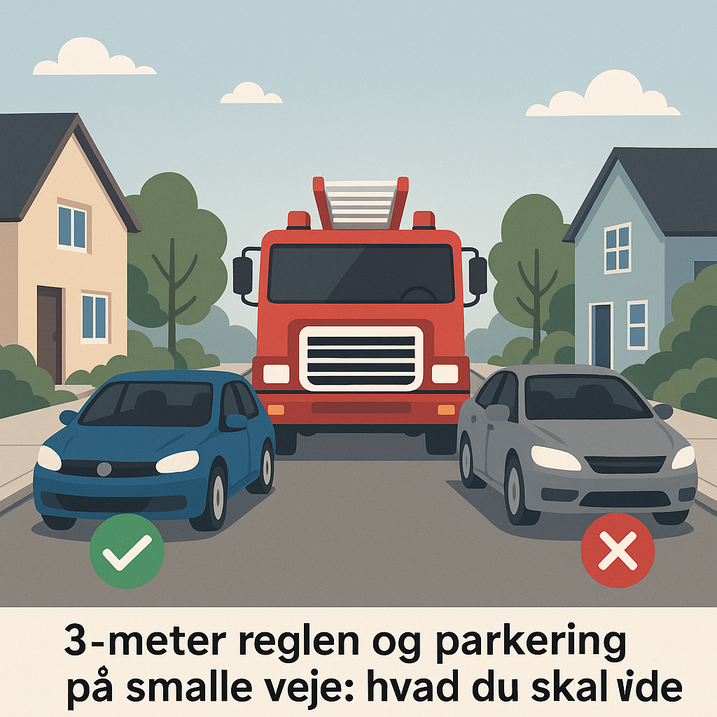
The 3-meter rule effectively states that there must always be a minimum of 3 meters (approx. 10 feet) of free passage between a parked vehicle and the center line (or the opposite curb). This ensures there is enough space on the roadway for other vehicles—including large essential vehicles like garbage trucks and fire engines—to pass without obstruction.
This rule is particularly critical on narrow residential roads, where the total road width may be limited. In these areas, the risk of blocking the road is high if cars park too close to the center or if vehicles park on both sides of the street simultaneously.
Consequences for parking on residential streets
On many residential lanes, the road surface is not wide enough to allow unrestricted parking on both sides while maintaining a clear passage of at least three meters. Therefore, residents and visitors should always consider the following:
- Park only on the right side in the direction of travel (or consistent with local flow), unless signage indicates otherwise.
- Assess whether the road is wide enough to allow parking without encroaching on the necessary center clearance.
- Avoid unofficial double parking or parking directly opposite another vehicle—this can instantly reduce free passage below the required three meters.
On particularly narrow stretches, local authorities or private landowners may prohibit parking on one side entirely, or allow partial parking on the pavement/sidewalk—provided there is still sufficient space for pedestrians (typically 1.5 meters).
General regulations and safety principles
While specific traffic acts vary by country, the core safety principles remain consistent across international borders. To ensure safety and compliance, the following guidelines generally apply:
- Sidewalks and Pavements: Parking on footpaths, cycle lanes, and pedestrian areas is generally prohibited unless explicitly permitted by local signage. This ensures safety for wheelchair users and pedestrians.
- Driveways and Access Points: You must never park in front of driveways, gates, or exits. Blocking access is a serious offense that typically incurs significant fines.
- Intersections and Crossings: Never park too close to road junctions, bus stops, pedestrian crossings, or cycle exits. A clearance distance (often between 5 to 10 meters depending on local laws) is required to maintain visibility for all road users.
On roads narrower than standard width—common in older residential areas—it can be difficult to establish official parking bays. Instead, safety relies on driver awareness and adherence to clearance principles.
Why is the 3-meter rule important?
It ultimately comes down to safety, accessibility, and traffic flow. When cars park without respecting the requirement for free passage, it can lead to severe consequences:
- Emergency Access: Ambulances and fire trucks are wide vehicles. If they cannot pass, response times increase, and minutes can be a matter of life and death.
- Service Disruption: Refuse collection vehicles may be unable to empty bins if they cannot navigate the street.
- Traffic Hazards: Increased risk of accidents as drivers are forced to perform dangerous maneuvers to squeeze past obstructions.
By adhering to the 3-meter principle, motorists contribute to the safety of the neighborhood and a more functional road network.
Solutions for parking challenges on narrow roads
Municipalities and private landowners (such as HOAs) have several tools to handle parking challenges where space is tight:
- Implementing one-way systems to free up road width for parking on one side.
- Marking designated “parking pockets” where physical road widening allows cars to stop without limiting the traffic lane.
- Converting from parallel parking to angled parking, but only where the road design specifically permits it.
- Using permit systems to limit the volume of vehicles in dense areas.
Especially in dense residential areas or shared private grounds, a clear and user-friendly parking strategy improves not just the resident experience but the overall functionality of the area.
Modern aid for parking management
At OPARKO, we offer digital parking solutions that make it easy for housing associations, property managers, and private landowners to manage the important details—such as ensuring compliance with safety rules on narrow roads.
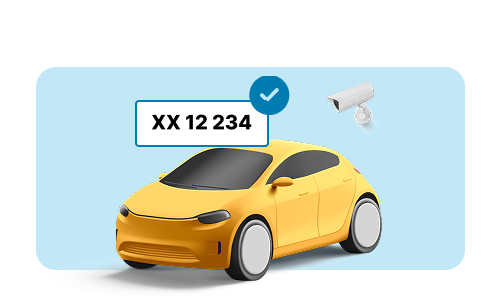
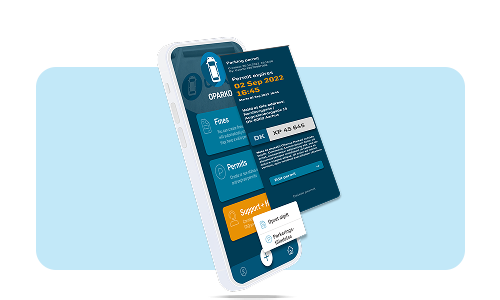
Our central parking platform provides an overview with a single click: administration of permits, enforcement, and payments are gathered in one place. Combined with advanced technology like Automatic Number Plate Recognition (ANPR), camera monitoring, and user-friendly app management, you get efficient and sustainable operations tailored to your specific needs—whether it is a residential quarter, a housing cooperative, or a shared parking facility.
A safe and organized neighborhood starts with space on the road
Respecting the 3-meter principle is not just about following the law—it is a practical necessity for maintaining a safe living environment. As a resident or property manager, it is vital to be knowledgeable about how parking on narrow streets should be handled.
With modern, digital solutions from OPARKO, you can manage and optimize parking conditions smartly and automatically—ensuring it is always easy and legal to find a spot without blocking access for others.
Want to know more about how our solution can help with parking management in your area?
Visit us at oparko.com and see how you can get a digital, reliable, and user-friendly parking solution with maximum overview and minimum administration.
Keywords included in the article:
3-meter parking rule, residential street parking, narrow road parking, digital parking solution, parking management app, parking enforcement, residential parking solutions.