

Parking near bus stops and pedestrian crossings: a global guide to rules & distances
TL;DR – know the rules before you park
- Bus Stops: Rules vary significantly. Australia enforces a strict 20-meter buffer, while the UK relies on painted yellow “cages.”
- Pedestrian Crossings: Visibility is key. In the UK, never park on White Zig-Zag lines. In the US, look for red curbs or keep a 20-foot distance.
- Junctions: A general rule of thumb in many countries is keeping 10 meters (32 feet) clear from corners.
- For Property Managers: Adopting the strictest standards ensures safety and accessibility on private land.
- Oparko Solutions: We provide digital parking management, including ANPR and automated permit handling, to ensure compliance across different jurisdictions.
Avoid fines: know the distance before you park
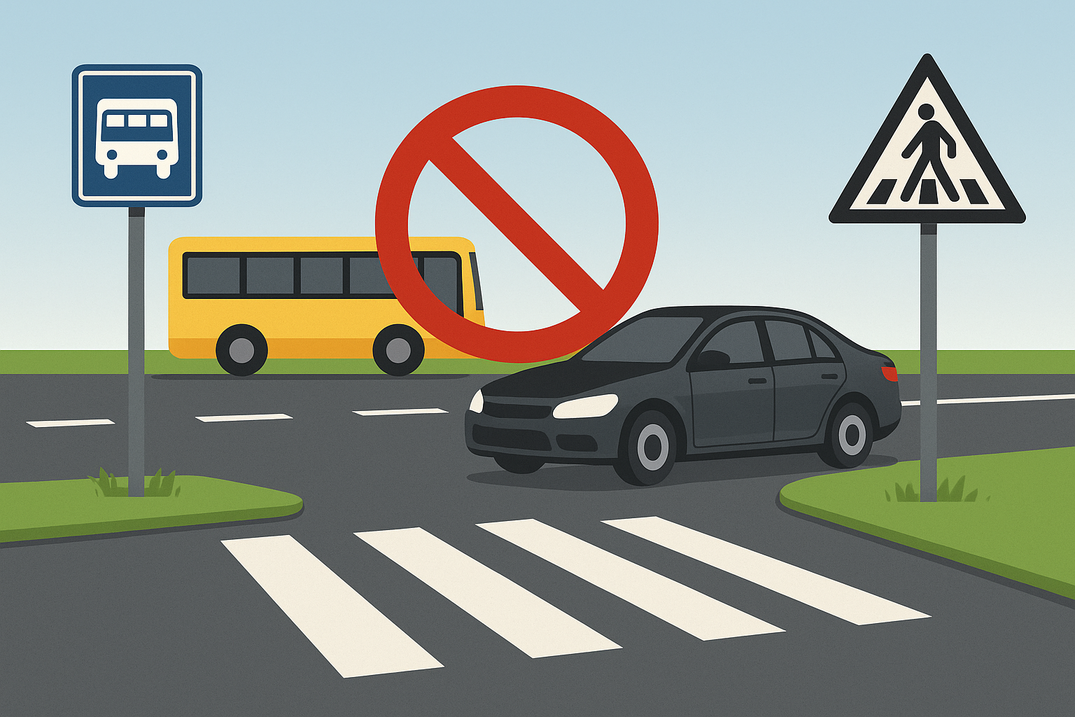
When parking in a city, knowing the precise distance requirements around bus stops and pedestrian crossings is crucial. These buffer zones are not just about avoiding tickets; they are designed to ensure safety (line-of-sight) and accessibility for public transport.
However, parking regulations vary wildly across borders. What is legal in one country may result in a steep fine in another. Below is a breakdown of how these critical safety zones are regulated in major English-speaking regions.
1. Parking at bus stops
In the United Kingdom:
Bus stops are usually clearly marked with a thick yellow box (cage) painted on the road and a vertical “Bus Stop” sign.
- The Rule: You must not park or stop within the marked yellow cage.
- If Unmarked: If there are no road markings, the Highway Code advises not to park where you would obstruct traffic, and generally prohibits parking within 10 meters of a junction, which often applies near stops.
In Australia:
Australia has some of the strictest distance rules defined by measurement rather than just paint.
- The Rule: Unless otherwise signed, you must not stop within 20 meters before and 10 meters after a bus stop sign. This ensures the bus has ample room to merge in and out of traffic safely.
In the USA:
- The Rule: Rules vary by state and municipality, but you generally cannot park within a “Bus Stop Zone” defined by signs.
- The Curb: Pay attention to Red or Yellow painted curbs. In many US cities, a painted curb indicates a strict no-parking zone, regardless of distance calculations.
2. Parking at pedestrian crossings (crosswalks)
In the United Kingdom:
- The Rule: Look for white Zig-Zag lines. It is strictly forbidden to park on these lines on either side of the crossing. They are designed to provide a clear view of pedestrians stepping onto the road.
In Australia:
- The Rule: Similar to their bus stop rules, consistency is key. You must not stop within 20 meters before and 10 meters after a pedestrian crossing.
In the USA:
- The Rule: The Uniform Vehicle Code generally suggests no parking within 20 feet (approx. 6 meters) of a crosswalk at an intersection to ensure visibility. However, always check for specific local signage as this is strictly enforced in urban centers.
3. Intersections and corners
Global Best Practice:
Most jurisdictions agree that parking too close to a corner is dangerous as it blocks the view for turning vehicles.
- UK: Do not park opposite or within 10 meters (32 feet) of a junction.
- USA: Usually no parking within 20 feet (6 meters) of a crosswalk at an intersection, or 30 feet (9 meters) upon the approach to a stop sign or traffic signal.
Why compliance matters for property managers
If you manage parking for housing associations, office complexes, or private roads, ensuring these safety zones are respected is your responsibility. Dangerous parking creates liability issues and blocks emergency access.
When managing properties across different regions, the most practical approach is often to adopt the strictest standards (such as the 20-meter rule) to ensure maximum safety and compliance.
How OPARKO helps
Oparko offers a digital parking solution that simplifies compliance, regardless of local regulations.
- Automated Number Plate Recognition (ANPR): Ensures only authorized vehicles enter and stay within designated times.
- Digital Permits: Eliminates physical tags and confusion about authorized spots.
- Surveillance & Control: We help set up the necessary monitoring to ensure that safety zones (like bus lanes and fire access) remain clear.
Looking to streamline your parking management?
Visit OPARKO.com to learn how we help private landowners and companies create safer, more efficient parking environments.