

TL;DR – Is it legal to park against the flow of traffic?
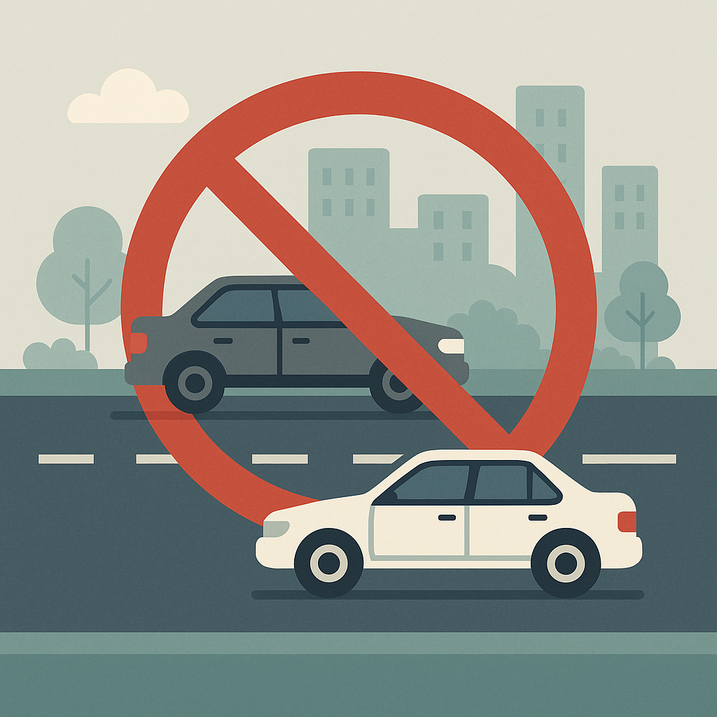
As a general rule, no. Whether you are in a country that drives on the right or the left, you must park in the direction of traffic flow. Parking against the flow (so-called “wrong-way parking”) is generally illegal and dangerous because it forces drivers to cut across lanes and disrupts traffic visibility.
Common exceptions
- One-way streets: Since traffic moves in only one direction, parking on either side is usually permitted (provided it faces the flow).
- Marked Parking Bays: In some regions, specific marked bays allow for exceptions if signed accordingly.
Illegal parking can result in significant fines depending on local regulations.
Tip: When in doubt, always park in the direction of travel. Do you need better control over parking on your private property? Consider a digital solution like OPARKO for effective enforcement and administration.
Wrong-way parking: Is it ever legal?
Finding a parking spot is a daily challenge, especially in urban areas with narrow streets and limited space. A common question that arises is whether it is permissible to cross the road and park on the opposite side—facing against the flow of traffic. While it might seem harmless to snag an open spot on the other side of the street, traffic laws in most countries are strict regarding vehicle orientation.
The global rule: Follow the flow
While traffic laws vary by country regarding speed limits and signage, the rule on parking direction is remarkably consistent worldwide:
- Right-Hand Traffic (e.g., USA, Most of Europe): You must park on the right side of the road. Parking on the left (against traffic) is illegal.
- Left-Hand Traffic (e.g., UK, Australia, Japan): You must park on the left side of the road. Parking on the right (against traffic) is illegal.
The logic is not arbitrary; it is rooted in safety. Parking against the flow implies that the driver had to drive on the “wrong” side of the road to enter the spot and must do so again to exit, creating a hazard for oncoming traffic.
Why is wrong-way parking dangerous?
Authorities enforce these rules for three primary safety reasons:
1. Dangerous entry and exit
To park against the flow, a driver must cut across a lane of oncoming traffic. When leaving the spot, the driver has poor visibility of oncoming cars because the driver’s seat is positioned near the curb rather than the center of the road. This forces the vehicle to pull blindly into active traffic.
2. Nighttime visibility (reflectors vs. headlights)
Vehicles are designed with red reflectors on the rear and white headlights on the front. At night, a car parked against traffic exposes its headlights to oncoming drivers (which can be blinding or confusing) and hides its rear red reflectors. This makes the parked car much harder to see for passing drivers, increasing the risk of collision.
3. Unpredictable behavior
Traffic flow relies on predictability. Other drivers and pedestrians do not expect a stationary vehicle to suddenly pull out from the “wrong” side of the road, leading to slower reaction times and potential accidents.
Exceptions – When might it be allowed?
One-way streets
The most common exception globally is one-way streets. Since traffic moves in a single direction across the entire width of the road, you are generally allowed to park on either the left or the right side, provided your vehicle is facing the direction of traffic flow.
Designated parking bays
In some jurisdictions (particularly in the UK and parts of Europe), marked parking bays that are set back from the road may have different rules, though the vehicle must usually still fit within the marked lines without obstructing the carriageway.
Consequences of non-compliance
Parking against the flow is a standard traffic violation. In the US, it is often cited as “parking left of curb,” while in the UK, it can lead to a Penalty Charge Notice (PCN), especially if done at night without parking lights.
Fines vary drastically depending on the city and country, ranging from minor administrative fees to substantial penalties if the vehicle is deemed a traffic hazard. For private landowners and businesses, having cars parked in conflicting directions can also cause congestion and accidents on private property.
A modern approach to parking management
While public roads are governed by national traffic laws, private parking areas—such as residential complexes, office parks, and commercial lots—require their own set of rules to maintain order.
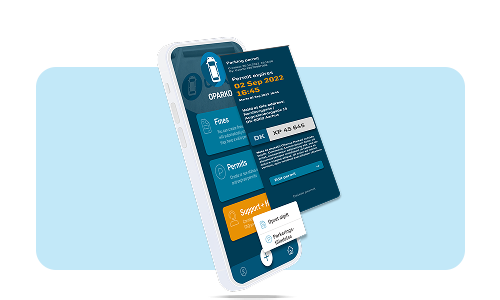
At OPARKO, we offer digital parking solutions that simplify enforcement and administration. Through a central platform, property owners can manage permissions, rentals, control, and payments efficiently.
With solutions tailored for housing associations, property management, and private landowners, you get:
- Digital Overview: Manage everything via one platform.
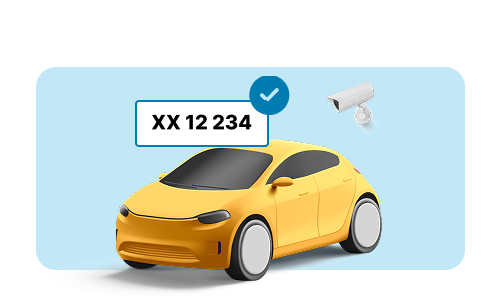
- Automated Control: Options for Automatic Number Plate Recognition (ANPR).
- Permit Management: efficiently handle digital parking permits.
- Revenue Generation: Easy setup for paid parking zones.
This results in less administration, fewer errors, and optimized usage of your parking areas. Clear digital enforcement ensures that users respect the rules of your private land, whether regarding time limits or vehicle positioning.
Final advice: Go with the flow
Even if it is tempting to cross the street for a convenient spot, it is rarely worth the risk. Unless you are on a one-way street or in a specifically signed area, the rule of thumb is universal: Always park in the direction of traffic.
Correct parking improves safety, protects your vehicle, and prevents fines. For those managing parking areas, using a modern solution like OPARKO ensures that your rules are followed and your administration remains hassle-free.
Want to learn how OPARKO can make parking simpler and more effective on your property? Contact us today for a digital solution tailored to your needs.