

TL;DR – The difference between parking charges and parking fines
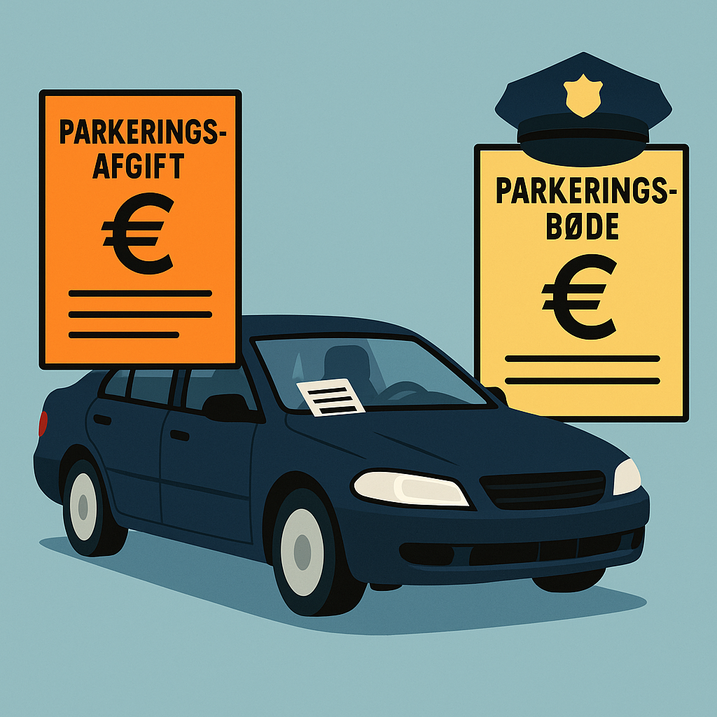
- A Parking Charge is issued by private parking operators or landowners for breaching contract terms on private land (e.g., overstaying a time limit or not displaying a permit). It is based on civil contract law.
- A Parking Fine (or Penalty Charge) is issued by the police or local councils for violating traffic laws (e.g., blocking a fire hydrant or parking dangerously). It is based on statutory/criminal law.
- Legally, private charges operate as an invoice for a breach of contract, while public fines are a penalty for breaking the law.
- Only public authorities (police/councils) have the statutory power to issue fines or immediately tow vehicles for traffic violations. Private operators must rely on contract terms.
- For landowners and housing associations, a digital parking solution like Oparko (using ANPR and permit management) is the most effective way to enforce private rules without relying on public authorities.
- Drivers should always check if they are on public or private land, follow signage, and ensure permits are valid to avoid unwanted fees.
Parking charge vs. parking fine: Understanding the difference
Many drivers have experienced the frustration of returning to their vehicle to find a ticket on the windshield. However, there is often confusion regarding what that ticket actually represents. Is it a legally binding fine from the government, or is it an invoice from a private company? At Oparko, where we provide digital parking management solutions, it is crucial for landowners, housing associations, and businesses to understand this distinction.
Here is a breakdown of the legal and practical differences between a private parking charge and a public parking fine, and how you can best organize parking on your property using digital tools.
What is a private parking charge?
A private parking charge (often called a “Parking Charge Notice” in the UK or a “Parking Invoice” in the US) is not a fine in the criminal sense. These are issued by private parking management companies on behalf of landowners. They are based on contract law.
When a driver enters a private car park (such as at a supermarket, office building, or residential complex), they are entering into a contract with the landowner. The terms of this contract are displayed on signage. If the driver breaches these terms—for example, by parking without a permit or overstaying the time limit—the “charge” is issued as a penalty for breach of contract (often referred to legally as liquidated damages).
What is a public parking fine?
A public parking fine (often called a “Penalty Charge Notice,” “Fixed Penalty Notice,” or “Citation”) is issued by the police or local government authorities (councils/municipalities). These are statutory sanctions.
These fines fall under traffic laws and are issued for violations that affect public order or safety, such as parking on double yellow lines, blocking traffic, parking in bus lanes, or unauthorized use of disabled spaces on public streets. Unlike private charges, these carry statutory weight and are enforced by the government.
The legal basis: Civil vs. statutory law
The core difference between the two lies in their legal foundation:
- Private Charges (Civil Law): These rely on the driver accepting a contract (usually by the act of parking). If a driver refuses to pay, the parking operator must pursue the debt through civil courts. The operator acts as a private creditor.
- Public Fines (Statutory Law): These are penalties for breaking government legislation. The police or council do not need to prove a contract existed; they only need to prove the law was broken. Non-payment can escalate quickly to court summons, increased penalties, or impacts on vehicle registration.
Common terminology confusion
In many English-speaking countries, the terminology is designed to look similar, which leads to confusion:
- United Kingdom: Drivers often confuse a “Penalty Charge Notice” (Official/Council) with a “Parking Charge Notice” (Private). Both are abbreviated as “PCN,” but their legal standing differs significantly.
- United States: A “Municipal Citation” is a legal court order, whereas a private “Parking Invoice” is a civil debt.
- General Rule: If the ticket is issued by the Police or City Council, it is a Fine. If it is issued by a private company (e.g., “Management Services”), it is a Charge/Invoice.
Who issues what?
It can be difficult to tell at a glance who has issued the ticket. Here is the general hierarchy:
- Private Parking Operators: Issue charges on behalf of private landowners (malls, residential blocks, offices). They enforce the rules set by the property owner.
- Local Councils / Municipalities: Issue fines for parking violations on public streets and in council-owned car parks.
- Police: Issue fines for serious traffic offences, dangerous parking, or obstruction of public highways.
Practical consequences for landowners
For private landowners, this distinction is vital. You cannot rely on the police to monitor your private car park. If a non-resident parks in a tenant’s spot, it is a civil matter, not a police matter.
Historically, this led to aggressive tactics like wheel clamping (booting) or towing, which are now illegal or heavily restricted in many jurisdictions. Today, the most effective way to manage private land is through digital enforcement.
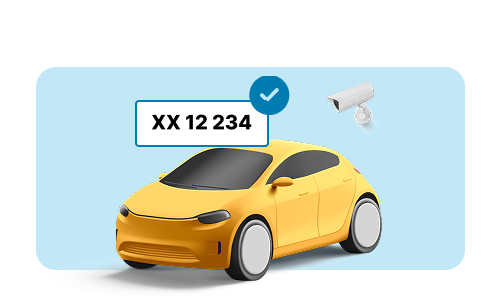
Using systems like Oparko, landowners can use Automatic Number Plate Recognition (ANPR) or digital permits to identify unauthorized vehicles and issue parking charges automatically via mail, ensuring the car park remains available for legitimate users without physical confrontation.
Why digital management matters for you
If you manage a housing association, office park, or shopping center, relying on physical patrols or outdated paper permits is inefficient. By adopting Oparko’s digital platform, you gain:
- Automated Enforcement: Ensure only authorized vehicles use your facilities.
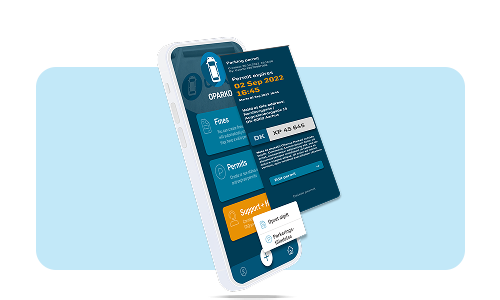
- Digital Permits: No more lost plastic cards or paper hang-tags; everything is managed via license plates.
- Revenue Control: If you choose to charge for parking, payments are handled seamlessly.
- Conflict Reduction: Clear digital rules reduce misunderstandings between tenants and guests.
Final advice
To avoid receiving either fines or charges, drivers should always:
- Check if the parking area is Public (Council/City) or Private (Managed).
- Read the signage carefully for time limits and terms.
- Ensure any required digital permits or parking apps are active.
For landowners, understanding that you have the right to enforce rules on your property via Civil Contract Law is the first step toward a better parking environment. Oparko provides the toolset to exercise that right efficiently.
Contact us today to learn how to digitize your parking assets and regain control of your space.
—
Oparko – Digital. Reliable. User-friendly.
One platform. One solution. Real results.